Instrument Deep Dive SLUG — InterMarketEdge

Instrument Deep Dive SLUG

Full L0–L8 structural analysis on a single instrument — conviction, invalidation, and time horizon

USDJPY — Ueda Hospitalized and Will Miss the June 16 Decision, Iran MOU Materializing, and Wave (c) Targeting 152.612

USDJPY — Ueda Hospitalized and Will Miss the June 16 Decision, Iran MOU Materializing, and Wave (c) Targeting 152.612

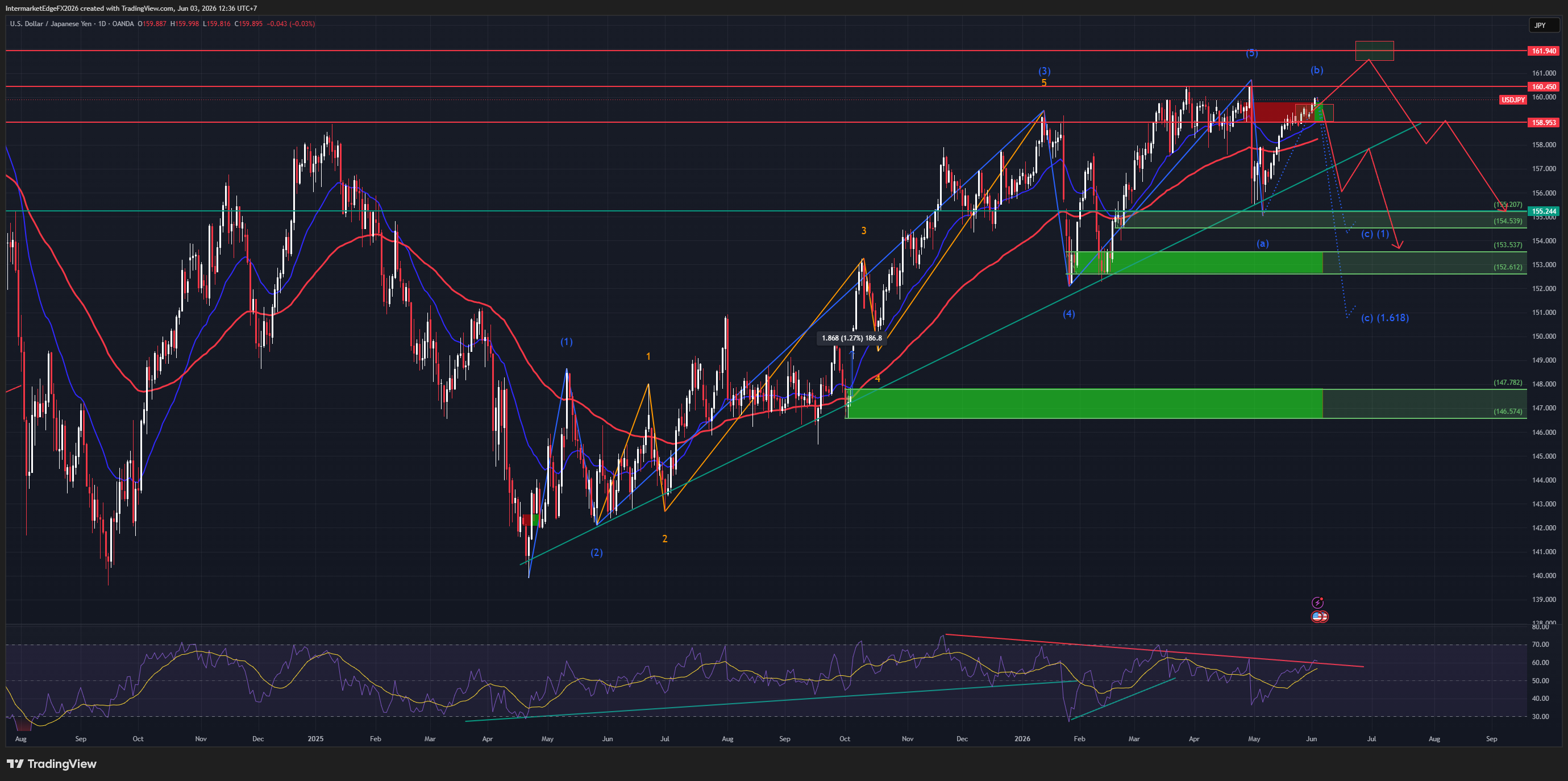
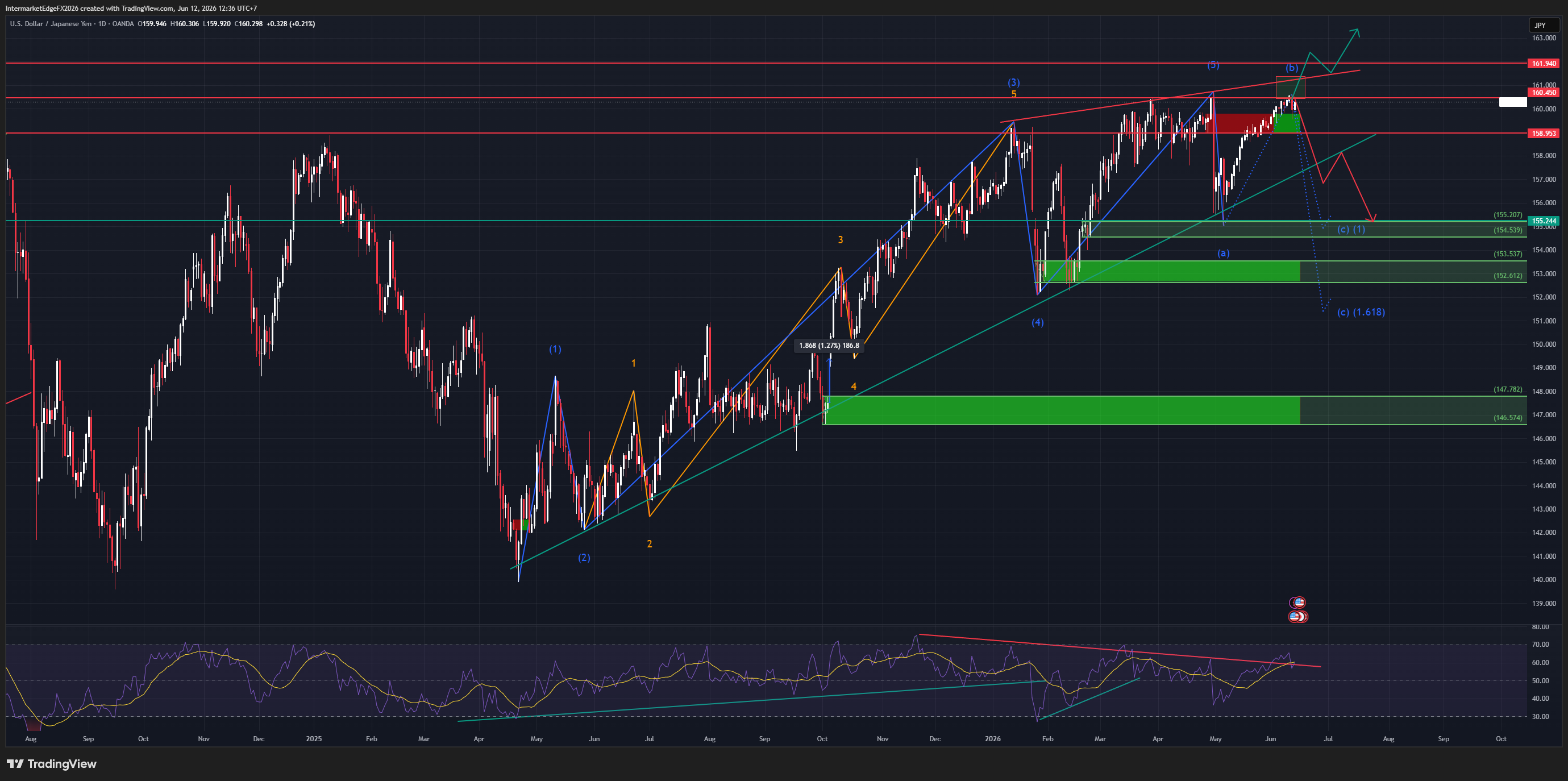
USDJPY 160.288 | BoJ hikes tomorrow | 12 June 2026 Two simultaneous developments in 48 hours. Both pulling in opposite directions. This is why USDJPY is stuck at 160.288. BoJ Governor Ueda has been hospitalized with an infected liver cyst and will miss the June 15-16 meeting — the first time a sitting governor has missed a scheduled meeting since 1998. The 25bp hike to 1% is still the base case. But the critical risk is the press conference: Deputy Governor Uchida holds it, not Ueda. In August 2024, Uchida reversed the entire BoJ policy signal in a single press conference: "It's necessary to maintain current levels of monetary easing for the time being." That speech triggered one of the largest yen carry trade unwinds in recent history. If June 16 produces similar language post-hike, the yen-positive from the hike is neutralized. Simultaneously: Trump stated "all parties have approved" the Iran MOU final points this morning. Brent declining from $94.58 toward $90. VIX -12.60%. Risk assets recovering. The Iran MOU is risk-on — carry reasserts, USDJPY moves toward 161 rather than declining. Pipeline JP10Y: 1.47% (stale). Sidebar: 2.655%. Corrected US-JP spread: 1.808% — not pipeline's 2.993%. Post-hike: 1.558%. Carry foundation near collapse. Invalidation: 161.346. Wave (c) targets: 152.612 → 147.782. The tell: Uchida's first 100 words at the June 16 press conference. Conviction: Medium Bear.
EURGBP — Iran Strikes US Bases in Bahrain, Kuwait and Jordan, Ceasefire Dead, and Wave (c) Accelerating Toward 0.8441

EURGBP — Iran Strikes US Bases in Bahrain, Kuwait and Jordan, Ceasefire Dead, and Wave (c) Accelerating Toward 0.8441

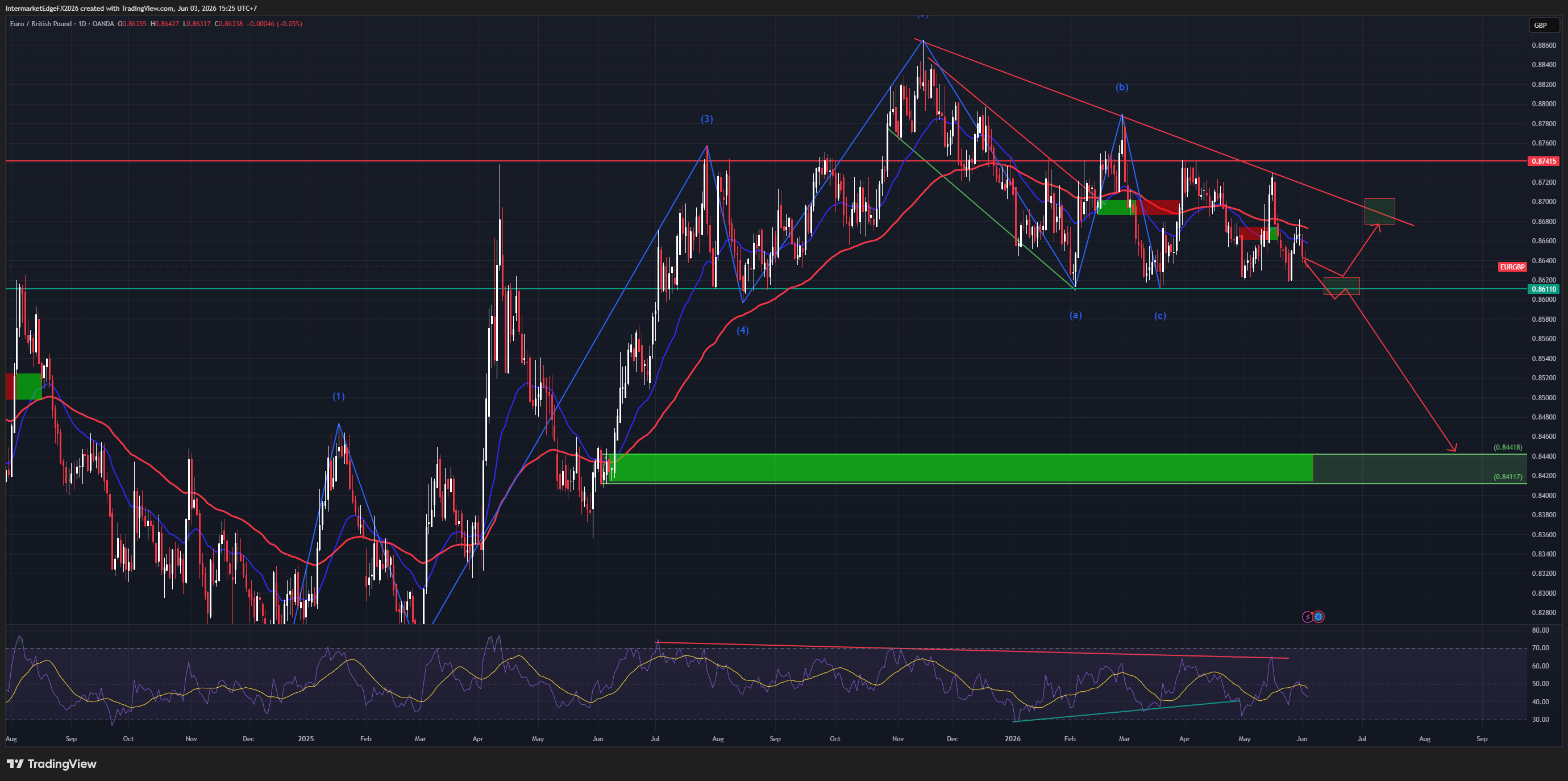
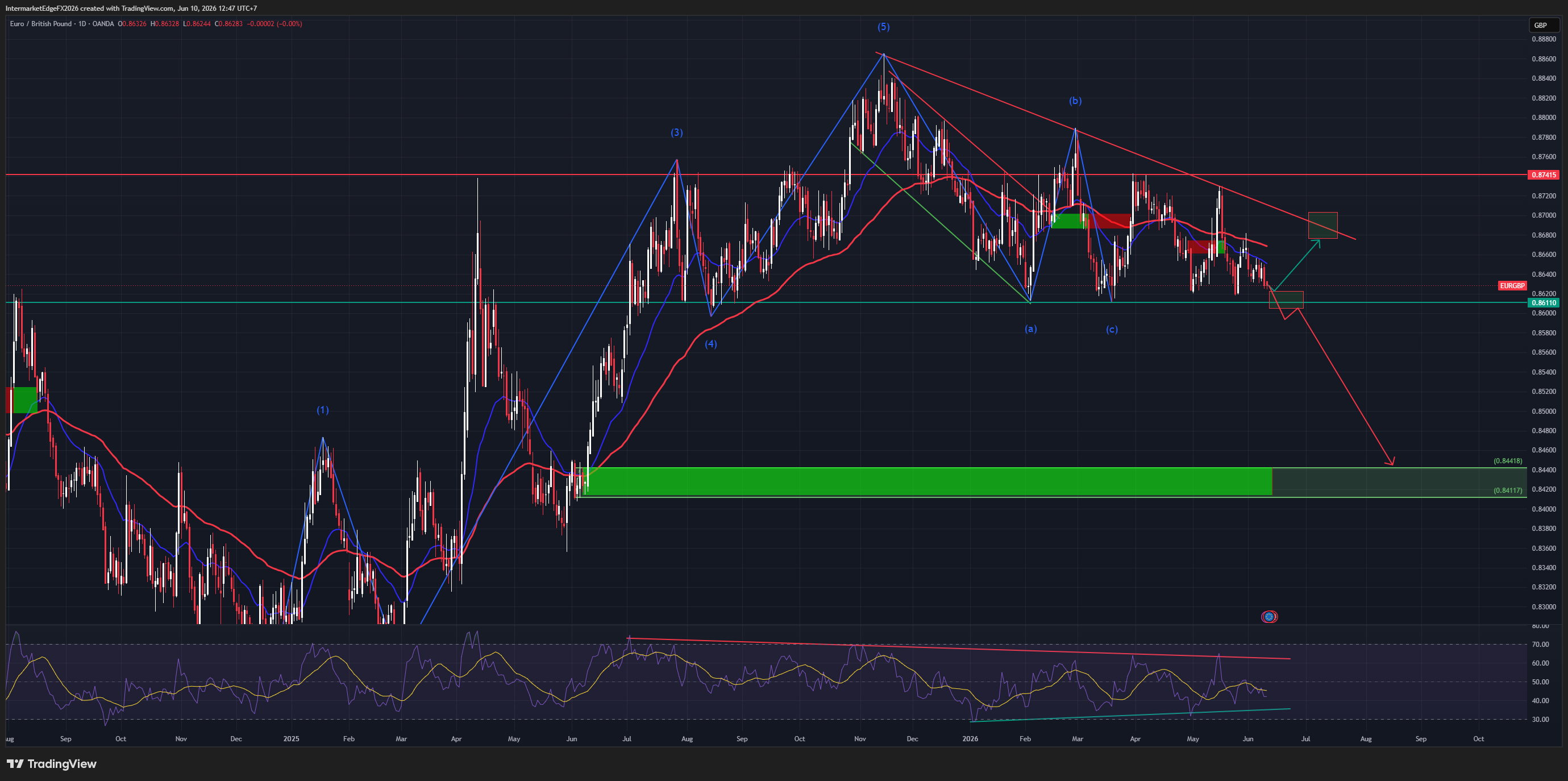
EURGBP 0.8628 | ECB paused, BoE split | 10 June 2026 Three developments since June 3. All consistent with the wave (c) bear thesis continuing. First: the ECB completed its cutting cycle. The June 5 cut to 2.25% confirmed and Lagarde signaled a pause at the neutral rate. The euro is no longer under systematic downward pressure from ongoing cuts. Paradoxically, arriving at neutral is mildly euro-supportive — but it does not change the 150bp ECB-BoE rate differential that is the structural anchor for this pair. Second: BoE Taylor confirmed the dovish hold. "Holding rates is the right place to be right now." MPC is split: Greene hawkish, Taylor dovish. Net reading: firmly on hold at 3.75%, with a live hawkish tail that could accelerate EURGBP lower on any UK CPI upside surprise. Third: oil declining. WTI $88.18, Brent $91.41 — down sharply from last week's $95-98 Iran-Israel escalation highs. Less oil means less UK energy inflation urgency, less Greene BoE hike case. Mildly slows the pace of wave (c) but does not reverse it. The critical distinction from other pairs: EURGBP momentum is confirming the wave (c) decline — no negative divergence, no exhaustion signal. EURJPY and USDJPY diverged at their wave (b) tops. EURGBP did not. This is a clean trend with room to run. Wave (c) targets: 0.84418 → 0.84117. Near-term bear confirmation: daily close below 0.8611. Invalidation: daily close above 0.8741. Conviction: Medium-High Bear.

USDCAD — Canadian Dollar at Eight-Week Low, BoC Holds June 10, Oil Slides, and USMCA Risk Keeps the Loonie Trapped

USDCAD — Canadian Dollar at Eight-Week Low, BoC Holds June 10, Oil Slides, and USMCA Risk Keeps the Loonie Trapped

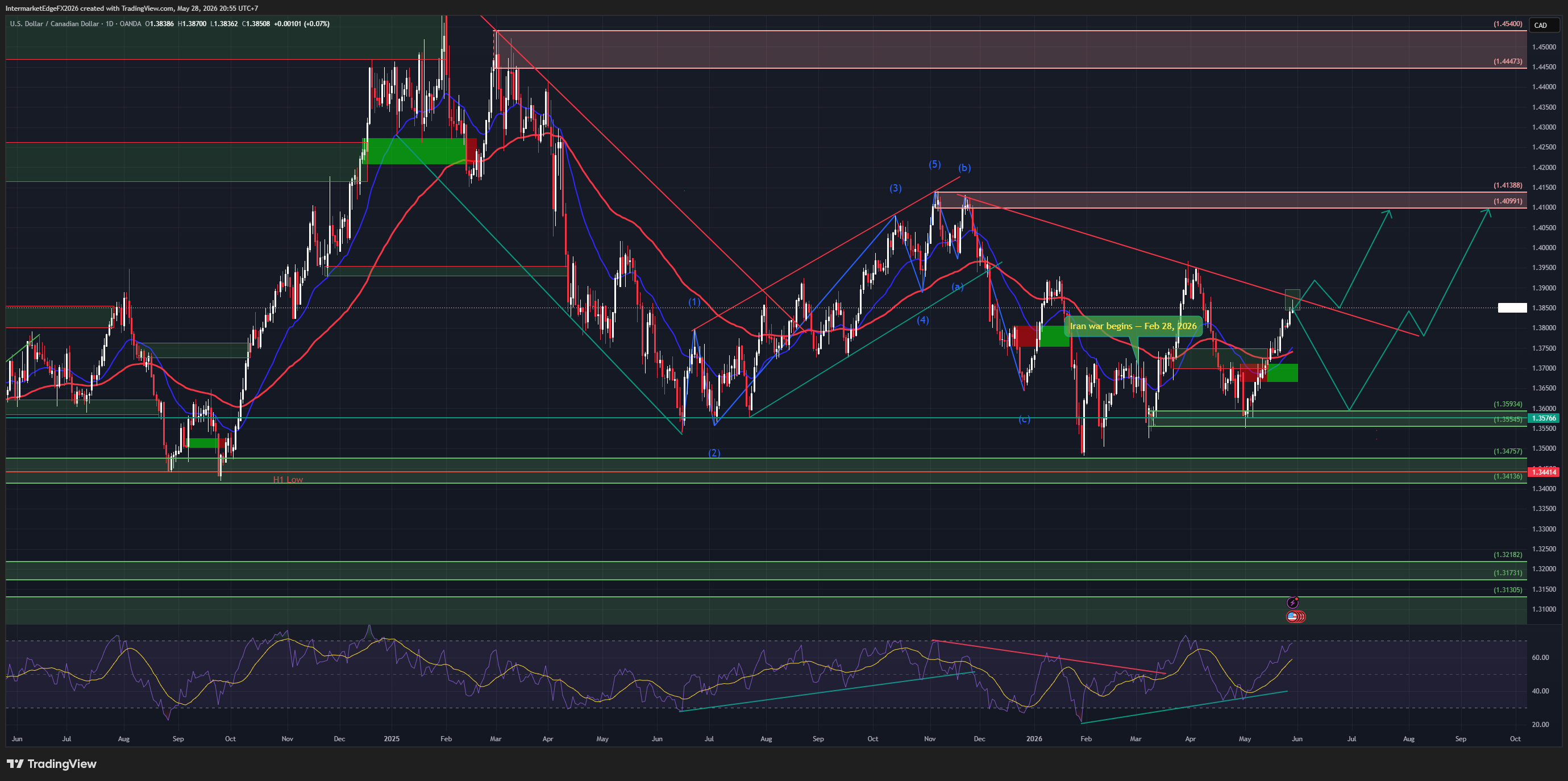
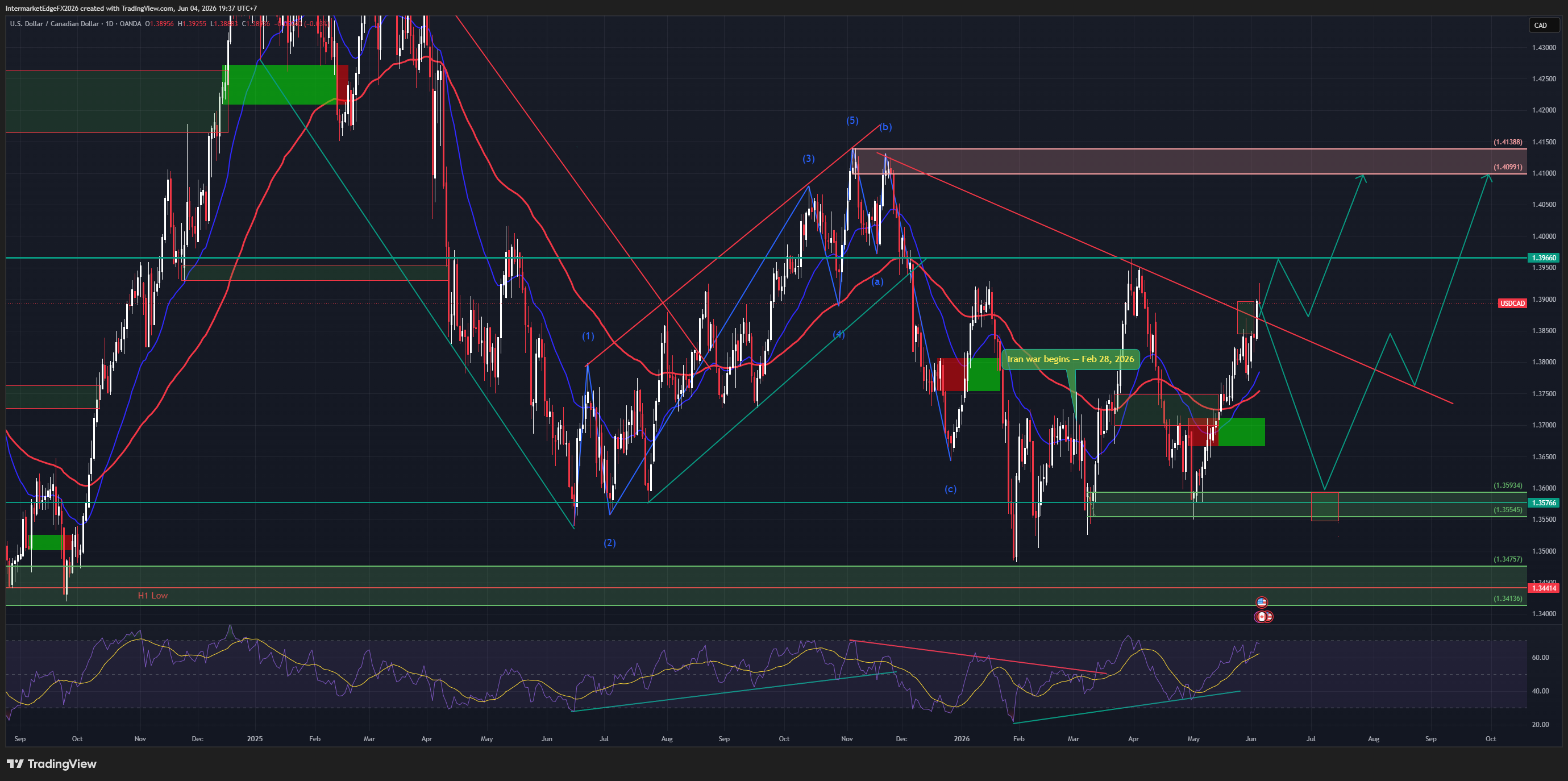
USDCAD 1.3893 | Canadian Dollar 8-week low | 04 June 2026 The Canadian dollar is at its weakest in eight weeks, and three forces are keeping it there simultaneously. First, oil. WTI has declined from $95.33 this morning to $92.61 — a $2.72 drop in a single session on Iran deal optimism. Canada is the largest crude exporter to the US. The oil-CAD channel is among the most stable relationships in FX, and it is working against the loonie today. The counterintuitive implication: if the Iran deal completes and oil falls toward $80-85, CAD gets weaker, not stronger. USDCAD could test 1.4099 resistance on deal completion. Second, domestic weakness. Canada's Q1 2026 GDP contracted for a second consecutive quarter. BoC core inflation measures slowed to five-year lows. The Bank of Canada meets June 10 and is expected to hold at 3.25% — but a dovish tone acknowledging the growth weakness would push USDCAD toward 1.4000-1.4050. Third, USMCA risk. AUDCAD at 0.9920 — below the 1.000 parity level — confirms the structural CAD discount from trade uncertainty is still live. Until AUDCAD holds above 1.000, CAD carries a structural discount that cannot be removed by oil alone. On the chart, price is approaching the 1.4099-1.4139 resistance zone. A daily close above 1.4099 confirms the bull move. A daily close below 1.3593 activates wave (c) lower toward 1.3477 then 1.3400. BoC June 10 is the gating event. Conviction: Medium, Mildly Bullish.

EURGBP — Greene Fires the Hawkish Signal, ECB Cuts Tomorrow, and the 0.8417 Target Is Back in Play

EURGBP — Greene Fires the Hawkish Signal, ECB Cuts Tomorrow, and the 0.8417 Target Is Back in Play

EURGBP 0.8632 | 03 June 2026 The cleanest directional setup in this week's coverage. Two events in the next eighteen hours are pointing the same direction, and the technical structure is mid-move with no exhaustion signal. BoE MPC member Megan Greene delivered a hawkish speech yesterday that materially changes the BoE narrative. She argued the case for raising UK rates has strengthened as the Iran war drags on, that acting sooner is more important than waiting for conclusive evidence, and — most critically — that without an imminent Bank Rate hike, the market yield curve tightening the BoE had been relying on would likely unwind. That is not a suggestion. That is a direct call for action. The ECB cuts tomorrow. The deposit rate moves from 2.50% to 2.25%. The ECB-BoE rate differential widens further against the euro after that cut — from 1.25% to 1.50% in sterling's favor. The oil channel is asymmetric. Brent above $100 applies inflation pressure to both economies, but the UK's energy import dependence means the passthrough is faster and more direct than in the Eurozone. Oil above $100 is Greene's entire argument for preemptive tightening. Every dollar Brent holds above $90 strengthens her case. On the chart, momentum is confirming wave (c) continuation — no divergence, no exhaustion. This is different from EURJPY where negative divergence flagged a topping process. Here the structure is mid-move. Invalidation: daily close above 0.8741. Bear trigger: daily close below 0.8600 on ECB event. Wave (c) targets: 0.84418 → 0.84117. Conviction: Medium-High Bear.

USDJPY Breaches 160 — Gulf Hostilities Boost Dollar, BoJ Intervention Clock Is Running, and the June 16 Hike Is Now 66% Priced

USDJPY Breaches 160 — Gulf Hostilities Boost Dollar, BoJ Intervention Clock Is Running, and the June 16 Hike Is Now 66% Priced

USDJPY 159.897 | intraday high 161.946 | 03 June 2026 USDJPY touched 161.946 this morning — clearing the prior intervention zone — then reversed 200 pips. That single candle is the most important price action of the week. It is either the market self-correcting ahead of MOF action, or verbal intervention has already begun. The structural bear case is built on three pillars that the data pipeline is obscuring. First, JP10Y is not 1.47% as the stale pipeline reads — the chart sidebar shows 2.621%. The corrected US-JP spread is 1.834%, not 2.985%. Carry trade math is deteriorating faster than most analysis reflects. Second, BoJ June 16 hike probability has moved to 66%. The April 28 meeting produced three dissenters voting to hike immediately, and Shunto wages showed 5.09% for a third consecutive year above 5%. Third, the MOF intervention asymmetry is severe: the Ministry spent $62 billion in 2024 defending the yen, the precedent near 160 produced an 800-pip round trip, and the firepower remains. The tactical complication is Gulf hostilities. Trump rejected the halt in US-Iran talks. Brent has retraced above $100. Oil above $100 is dollar-positive and yen-negative simultaneously — Japan is the world's fourth-largest oil importer. This dual channel is why the pair broke 160 today. It reverses the moment a deal is signed. Invalidation: daily close above 161.346. Bear confirmation: daily close below 159.000. Wave (c) targets: 152.612 → 147.782. Today's daily close is the definitive tell. Conviction: Medium-High Bear.

Sterling Trapped — Bailey Pushes Back, Iran Stalemate Persists, and the 1.3400 Floor Defines the Trade

Sterling Trapped — Bailey Pushes Back, Iran Stalemate Persists, and the 1.3400 Floor Defines the Trade

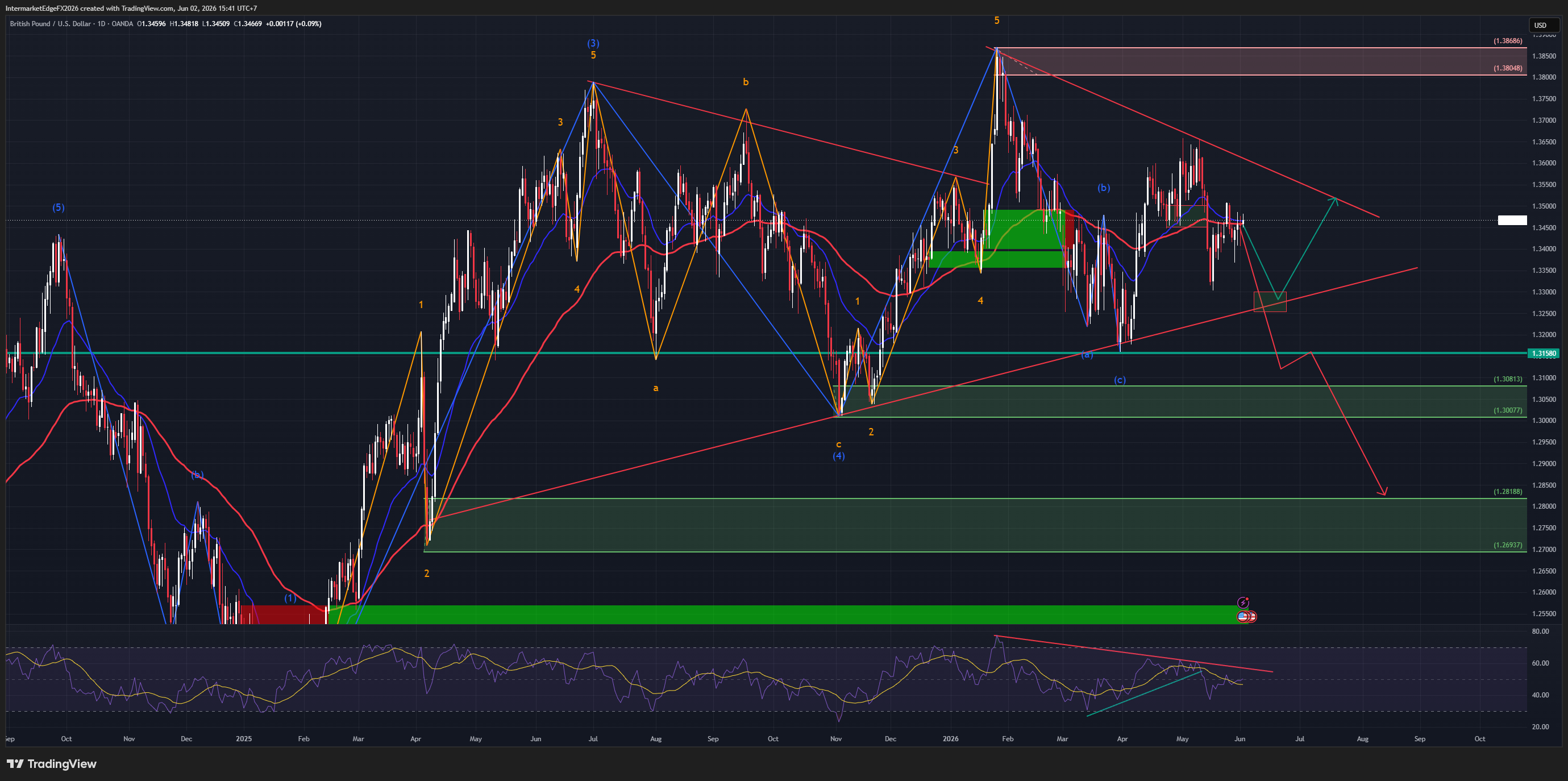
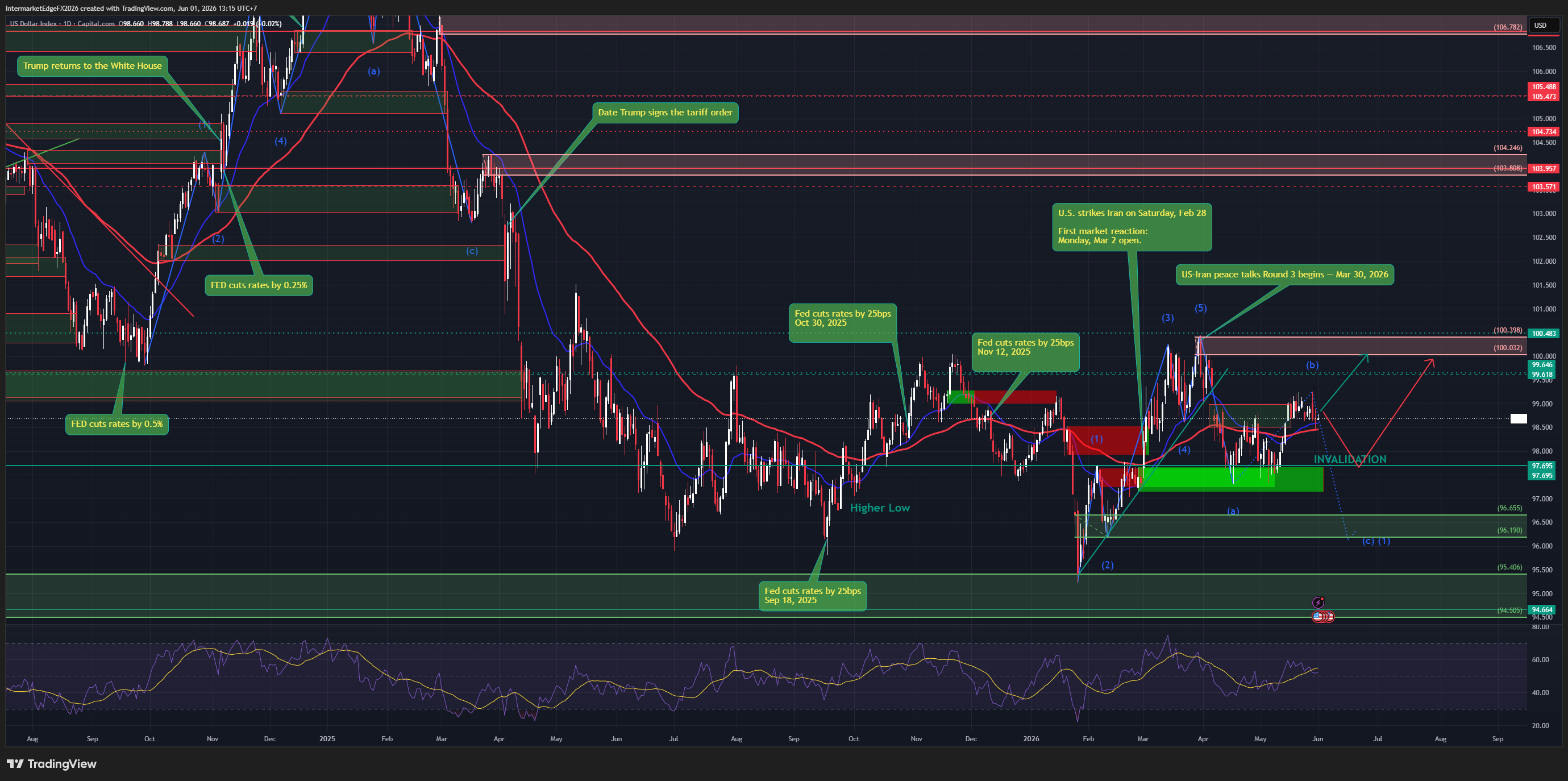
GBPUSD 1.3462 | 02 June 2026 Sterling has been trapped in the 1.3300–1.3500 range for two weeks, and the tension keeping it there is not resolving soon. Two forces are pulling in opposite directions and neither has won. The bull case runs through the dollar channel, not sterling itself. DXY is in a Medium Bear framework driven by the Iran deal decompression cascade — Brent has fallen $17.95 from its $111.27 peak on May 18. When the deal progresses, DXY falls and cable rises mechanically. The UK energy vulnerability factor amplifies this: as a net energy importer, every dollar of Brent decline below $90 benefits sterling disproportionately relative to other G10 pairs. The bear case is Bailey. The BoE Governor has spent the past week systematically removing rate hike premium from sterling. He stated that allowing inflation to exceed 2% is appropriate given weak growth, that the BoE is in no rush to raise rates while Iran remains uncertain, and that even a 60-day ceasefire would still create uncertainty. Markets were pricing 32bp of tightening in 2026; Bailey has been capping that at every opportunity. This morning's US ISM Manufacturing PMI at 54.0 — beating the 53.0 consensus — added a mild dollar bid that is currently capping GBPUSD near 1.3480. On the chart, the 1.3400–1.3450 green support has held on every test. Resistance at 1.3500–1.3550. Bear targets if support breaks: 1.3081, 1.3007, 1.2818. Key tell this week: EURGBP around ECB June 5. A break below 0.8600 is a leading indicator of cable strength. Conviction: Medium, Neutral-to-Mild Bear. Iran binary resolves the range.

USDCAD: Canadian Dollar Hits Six-Week Low as USMCA Headline Risk Grows - USDCAD at the Crossroads of Oil Decompression and Dollar Structural Bid

USDCAD: Canadian Dollar Hits Six-Week Low as USMCA Headline Risk Grows - USDCAD at the Crossroads of Oil Decompression and Dollar Structural Bid

**The Canadian dollar just hit a six-week low. And the reason is not oil.** Everyone watching CAD is focused on the Iran deal decompression and WTI direction. They are missing the more important driver that appeared in today's headline: USMCA headline risk. USMCA is the backbone of Canada-US trade. Approximately 75% of Canadian exports go to the US market. Any renegotiation signal, tariff threat, or deterioration in USMCA terms is a structural CAD negative that operates entirely independently of oil price. CAD can weaken even when oil is rising. That is what is happening right now. The proof is in AUDCAD. AUD is a commodity currency similar to CAD but without USMCA exposure. AUDCAD is sitting at 0.9864, below 1.000. CAD is underperforming AUD. That is not a commodity story. That is a Canada-specific story. USDCAD is now navigating three independent forces simultaneously: USMCA risk - Canada-specific, unrelated to oil, unscheduled catalyst Iran deal oil decompression - WTI bear thesis toward $74-71, structurally bearish CAD Fed-BoC differential - if BoC cuts before Fed on Canada slowdown, rate divergence accelerates USDCAD higher DXY below 100 and the EIA crude draw of 7.9M bbl (from earlier today's analysis) are the counterforces keeping USDCAD flat rather than spiking. The chart shows two competing Elliott Wave counts converging at 1.3842. Both point toward the 1.4099-1.4139 resistance zone as the next major target if bullish drivers align. The wave (b) demand zone at 1.3540-1.3593 is the floor if USMCA reassurance materializes. Two tells to watch: AUDCAD continuing below 0.9864 toward 0.97 = USMCA risk is real, USDCAD rallies AUDCAD bouncing back above 1.00 = USMCA risk fading, USDCAD pulls back The most dangerous scenario: USMCA risk escalates at the same time the Iran deal is signed. Oil drops (bearish CAD) while trade risk increases (also bearish CAD). USDCAD would test 1.42+ with very little resistance. Conviction: Medium. Bias: Mildly bullish USDCA

USDJPY | May 21, 2026  - The Pair That Just Hit Two Walls Simultaneously - Iran Deal Optimism Meets BoJ Hawkish Signal

USDJPY | May 21, 2026 - The Pair That Just Hit Two Walls Simultaneously - Iran Deal Optimism Meets BoJ Hawkish Signal

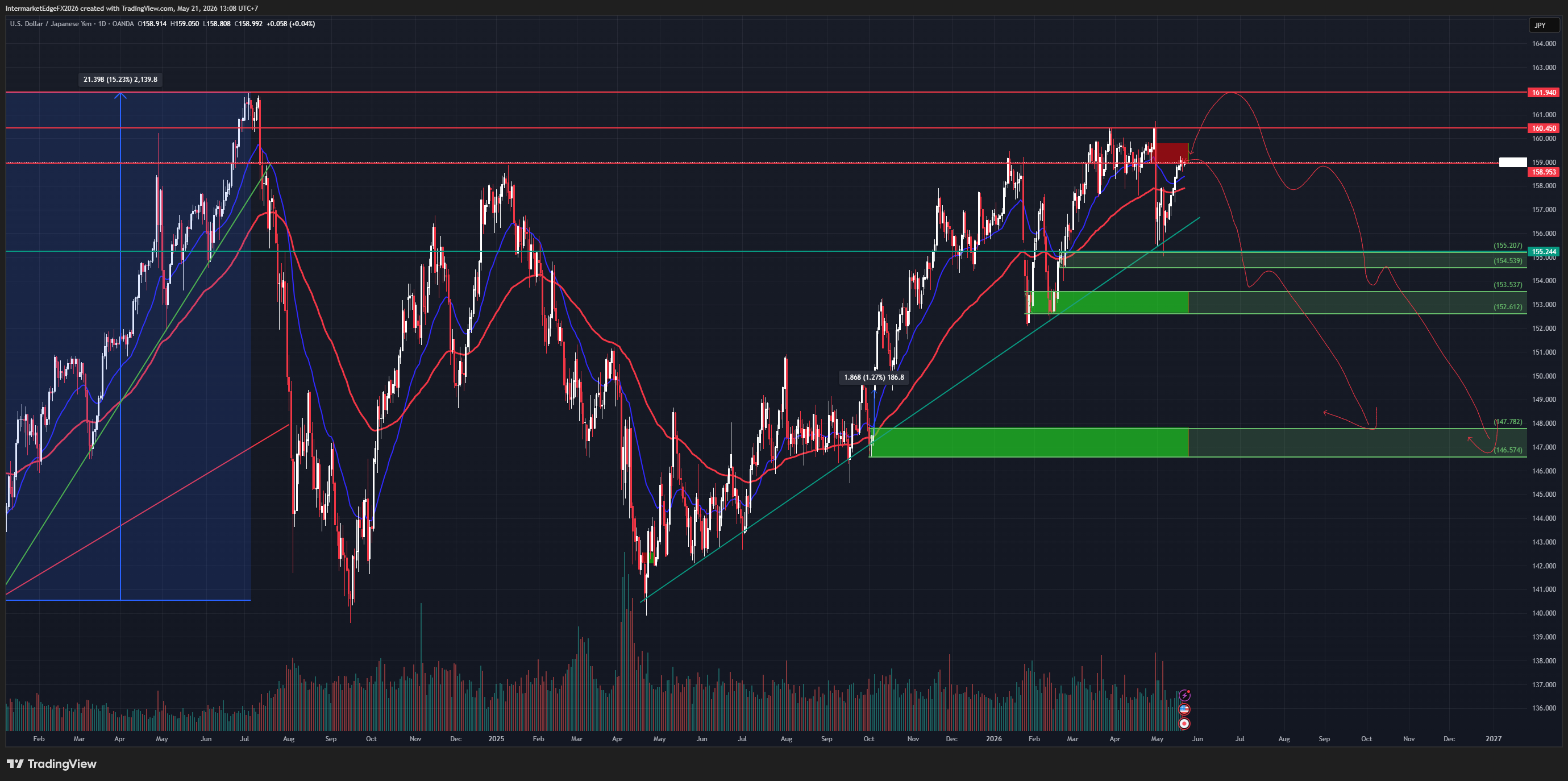
USDJPY | May 21, 2026 USDJPY hit 160 on Wednesday. It has already rejected from that level. And the forces now aligned against the dollar-yen carry trade are the strongest combination seen in this week's entire analysis series. Two things happened simultaneously in the last 24 hours. Trump said Iran negotiations are in the "final stages," causing the dollar to fall against the yen for the first time in eight consecutive sessions as safe-haven USD flows reversed. And BoJ board member Junko Koeda delivered an explicit hawkish signal, stating the central bank needs to continue raising rates with underlying inflation already around the 2% target. Both forces are USDJPY-negative. Neither is ambiguous. The Brent crude sequence this week captures the macro shift in a single column of numbers. From $111.27 on May 18 to $106.09 today - a $5 decline in three trading days. The Hormuz geopolitical premium is decompressing in real time. For Japan specifically, this creates a double tailwind: the safe-haven USD bid falls as geopolitical risk eases, and energy import cost pressure reduces as oil softens. JPY benefits from both sides of the Iran de-escalation trade simultaneously. The 160 level is not just technical resistance. It is the intervention threshold. Japan's Ministry of Finance has acted at this level before. This creates an asymmetric risk profile: upside is hard-capped at 160 by intervention threat, downside is structurally open toward 155-152 and potentially 147-148 if Brent breaks below $100. Three drivers aligned bearish for the first time this week: Iran de-escalation removes safe-haven USD premium, BoJ normalization compresses the carry spread, and the intervention zone eliminates meaningful upside. The one counter-force - the US-JP yield spread at approximately 3.10% - is compressing but not yet broken. Conviction: Medium-High. Watch 160. Watch Brent.

InterMarketEdge

© 2026 InterMarketEdge. Financial intelligence for inter-market traders.