Tag: EURGBP — InterMarketEdge

Tag: EURGBP

EURGBP — Iran Strikes US Bases in Bahrain, Kuwait and Jordan, Ceasefire Dead, and Wave (c) Accelerating Toward 0.8441

EURGBP — Iran Strikes US Bases in Bahrain, Kuwait and Jordan, Ceasefire Dead, and Wave (c) Accelerating Toward 0.8441

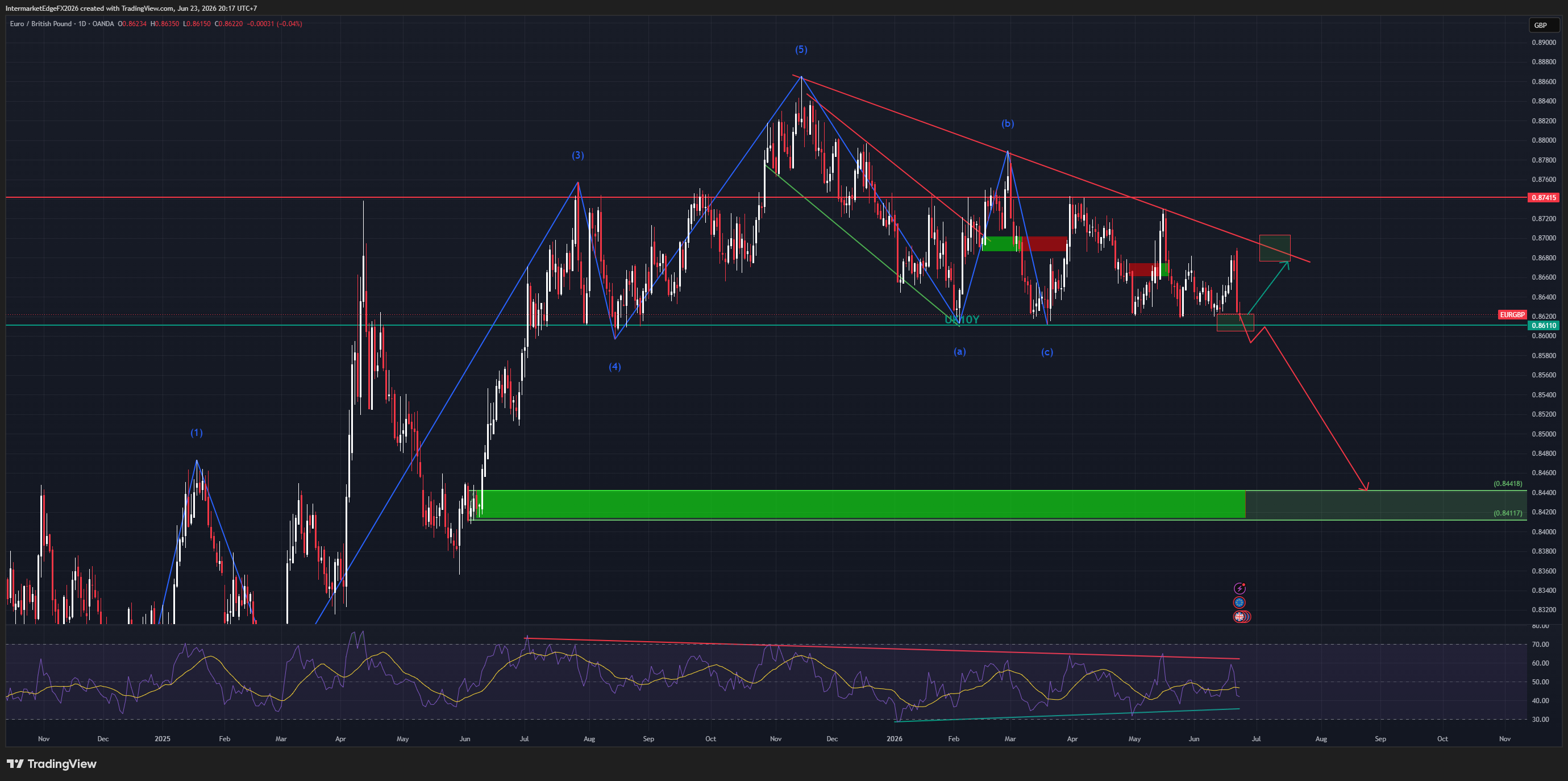
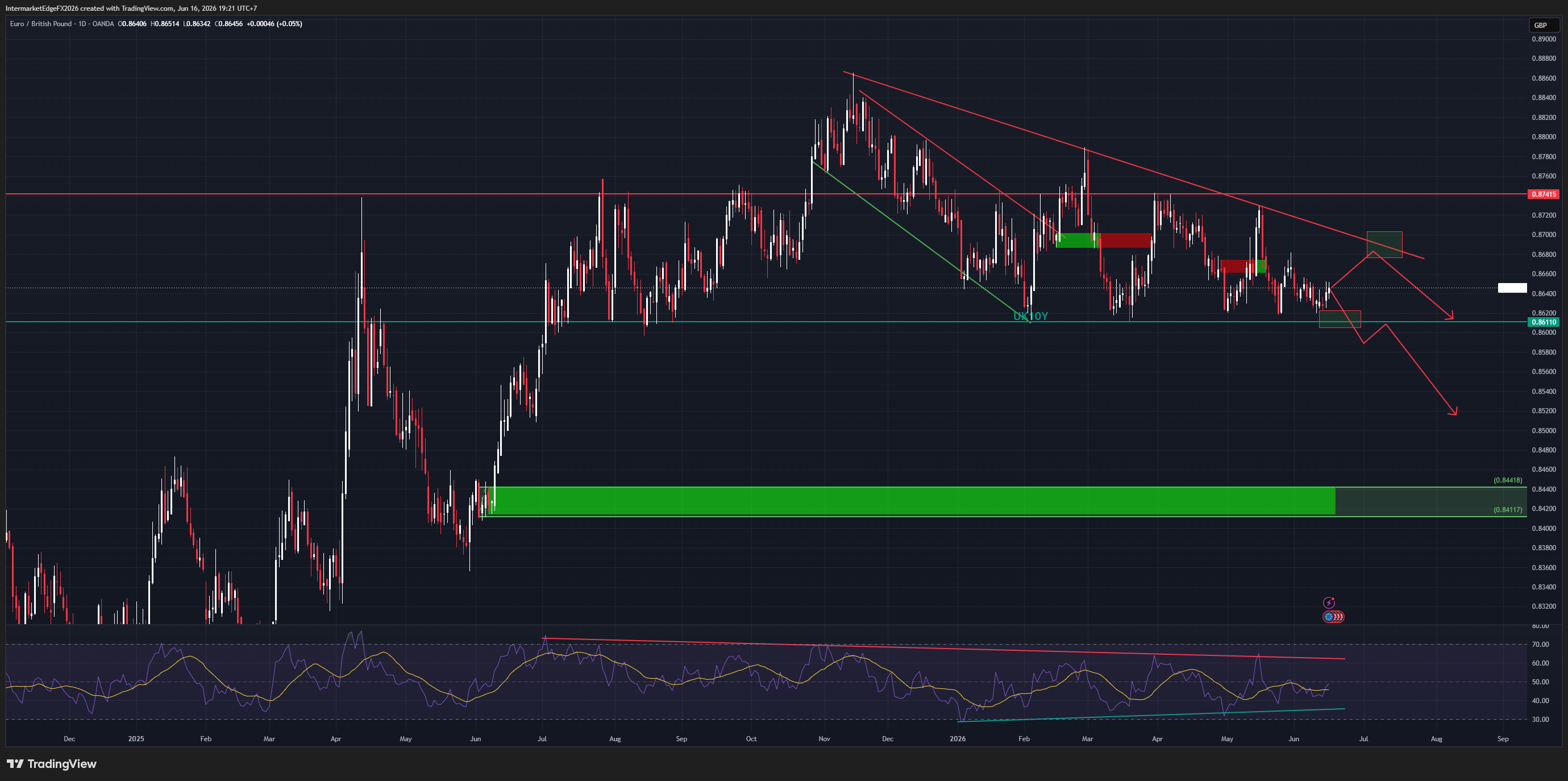
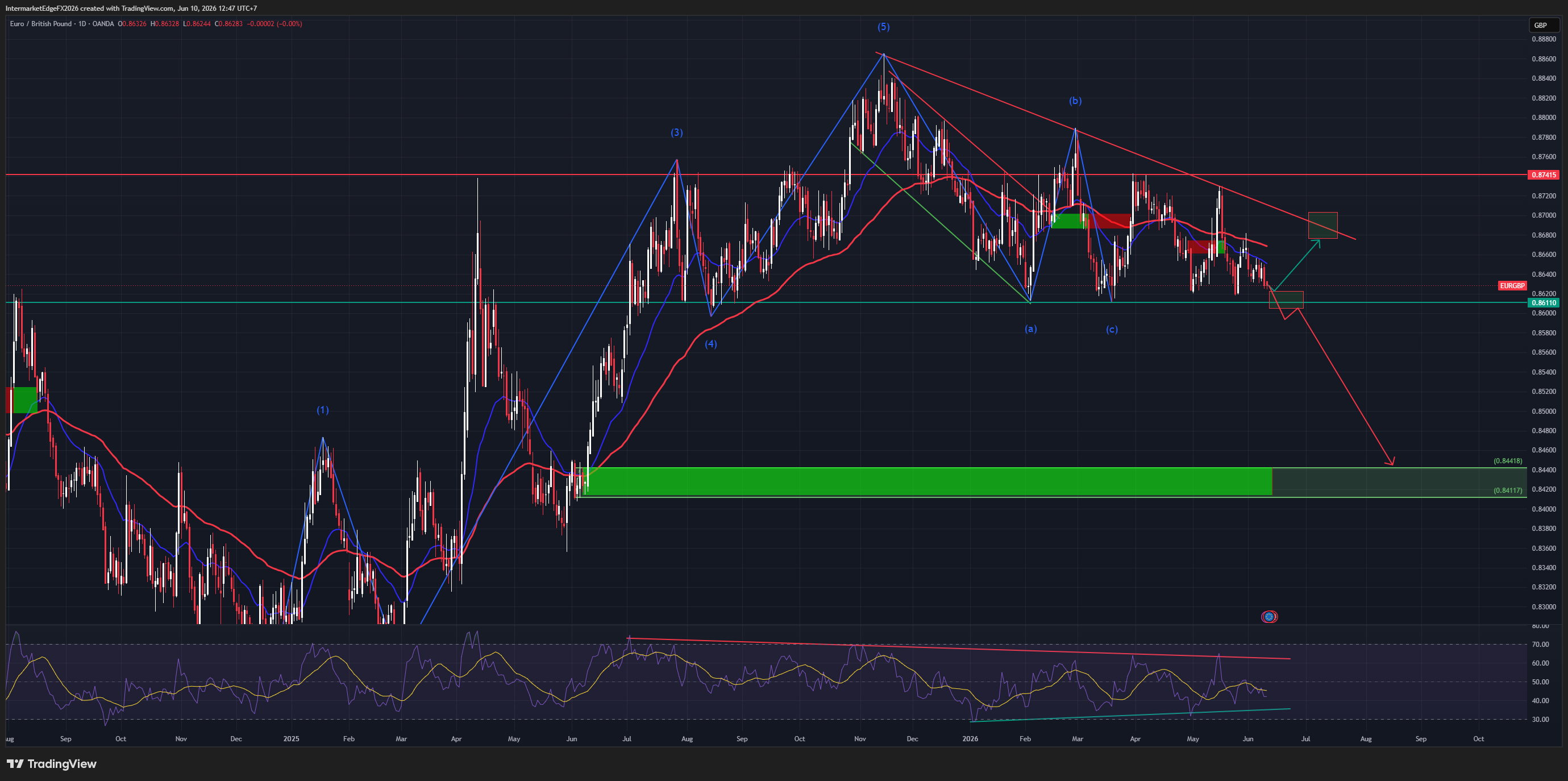
EURGBP 0.8628 | ECB paused, BoE split | 10 June 2026 Three developments since June 3. All consistent with the wave (c) bear thesis continuing. First: the ECB completed its cutting cycle. The June 5 cut to 2.25% confirmed and Lagarde signaled a pause at the neutral rate. The euro is no longer under systematic downward pressure from ongoing cuts. Paradoxically, arriving at neutral is mildly euro-supportive — but it does not change the 150bp ECB-BoE rate differential that is the structural anchor for this pair. Second: BoE Taylor confirmed the dovish hold. "Holding rates is the right place to be right now." MPC is split: Greene hawkish, Taylor dovish. Net reading: firmly on hold at 3.75%, with a live hawkish tail that could accelerate EURGBP lower on any UK CPI upside surprise. Third: oil declining. WTI $88.18, Brent $91.41 — down sharply from last week's $95-98 Iran-Israel escalation highs. Less oil means less UK energy inflation urgency, less Greene BoE hike case. Mildly slows the pace of wave (c) but does not reverse it. The critical distinction from other pairs: EURGBP momentum is confirming the wave (c) decline — no negative divergence, no exhaustion signal. EURJPY and USDJPY diverged at their wave (b) tops. EURGBP did not. This is a clean trend with room to run. Wave (c) targets: 0.84418 → 0.84117. Near-term bear confirmation: daily close below 0.8611. Invalidation: daily close above 0.8741. Conviction: Medium-High Bear.

EURGBP — Greene Fires the Hawkish Signal, ECB Cuts Tomorrow, and the 0.8417 Target Is Back in Play

EURGBP — Greene Fires the Hawkish Signal, ECB Cuts Tomorrow, and the 0.8417 Target Is Back in Play

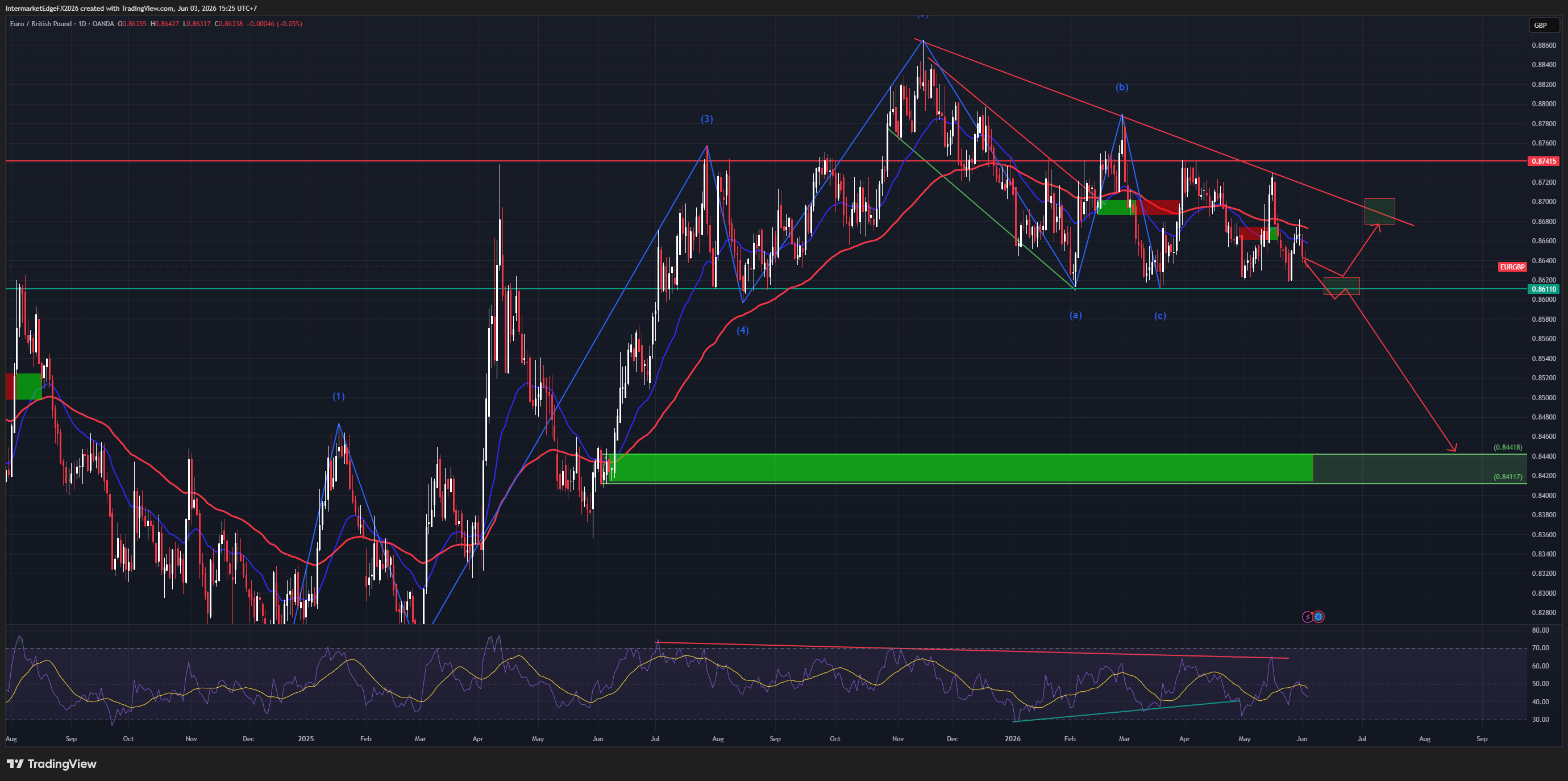
EURGBP 0.8632 | 03 June 2026 The cleanest directional setup in this week's coverage. Two events in the next eighteen hours are pointing the same direction, and the technical structure is mid-move with no exhaustion signal. BoE MPC member Megan Greene delivered a hawkish speech yesterday that materially changes the BoE narrative. She argued the case for raising UK rates has strengthened as the Iran war drags on, that acting sooner is more important than waiting for conclusive evidence, and — most critically — that without an imminent Bank Rate hike, the market yield curve tightening the BoE had been relying on would likely unwind. That is not a suggestion. That is a direct call for action. The ECB cuts tomorrow. The deposit rate moves from 2.50% to 2.25%. The ECB-BoE rate differential widens further against the euro after that cut — from 1.25% to 1.50% in sterling's favor. The oil channel is asymmetric. Brent above $100 applies inflation pressure to both economies, but the UK's energy import dependence means the passthrough is faster and more direct than in the Eurozone. Oil above $100 is Greene's entire argument for preemptive tightening. Every dollar Brent holds above $90 strengthens her case. On the chart, momentum is confirming wave (c) continuation — no divergence, no exhaustion. This is different from EURJPY where negative divergence flagged a topping process. Here the structure is mid-move. Invalidation: daily close above 0.8741. Bear trigger: daily close below 0.8600 on ECB event. Wave (c) targets: 0.84418 → 0.84117. Conviction: Medium-High Bear.

EURJPY at the Ceiling — ECB Cuts Into BoJ Normalization, Oil Rebounds, and 187.936 Is the Line That Cannot Hold

EURJPY at the Ceiling — ECB Cuts Into BoJ Normalization, Oil Rebounds, and 187.936 Is the Line That Cannot Hold

EURJPY 186.063 | 02 June 2026 EURJPY is sitting inside the red resistance zone at 186.00–188.012, and the bear case here is the highest-conviction position in this week's entire instrument coverage. Three structural forces are aligned in the same direction. The ECB is cutting. The June 5 decision — two days away — takes the deposit rate from 2.50% to 2.25%. The rate differential between the ECB and BoJ is compressing, and it will compress further with every subsequent cut. A cutting central bank does not produce a strong currency. The euro is the structurally weaker leg of this cross. The BoJ is normalizing. The pipeline's JP10Y reads 1.47% — stale, last updated May 9. The chart sidebar shows 2.563%. That 110 basis point gap is not a rounding error; it reflects a Japanese bond market that is pricing significantly more BoJ tightening than the pipeline implies. The yen leg of EURJPY has structural support the data pipeline is obscuring. The intervention ceiling is live. USDJPY at 159.852 is 15 pips from 160.00 — the threshold that triggered verbal and physical BoJ intervention in 2024 and that the market universally treats as the current line. A physical intervention would produce a 3–5% yen rally and drive EURJPY down 500–700 pips rapidly. The asymmetry is severe: upside above 160 is capped, downside from intervention is sharp. The single countervailing factor is today's Brent rebound from $91.69 to $98 on Iran deal uncertainty. Japan is the world's fourth-largest oil importer — oil up means yen weakens mechanically. This is why EURJPY is holding near 186 rather than already declining. It is transitional noise, not a structural reversal. Invalidation: daily close above 187.936. Bear confirmation: daily close below 184.00. Wave (c) targets: 171.047 → 169.867. ECB June 5 is the trigger. Conviction: Medium-High Bear.

Sterling Trapped — Bailey Pushes Back, Iran Stalemate Persists, and the 1.3400 Floor Defines the Trade

Sterling Trapped — Bailey Pushes Back, Iran Stalemate Persists, and the 1.3400 Floor Defines the Trade

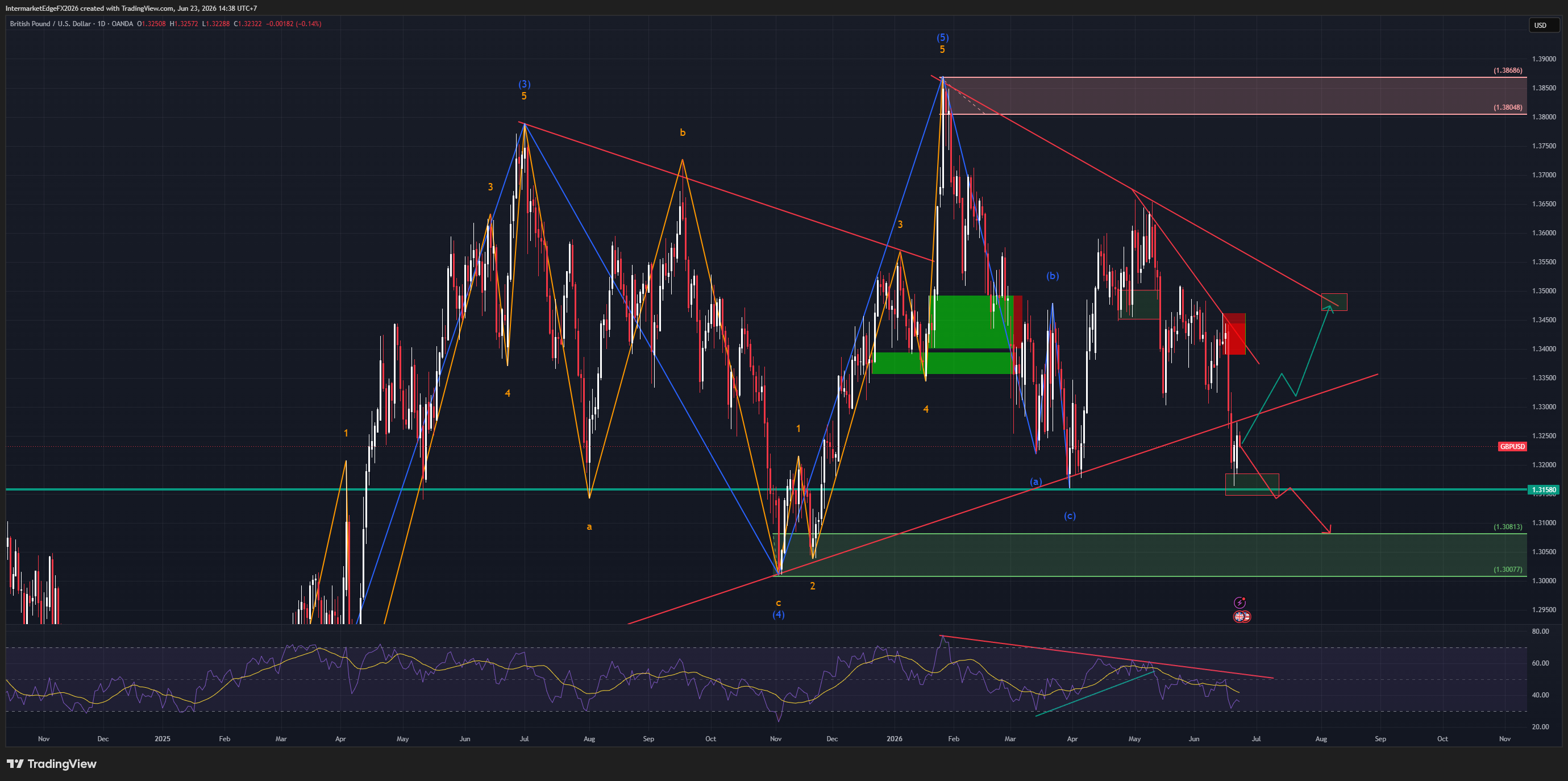
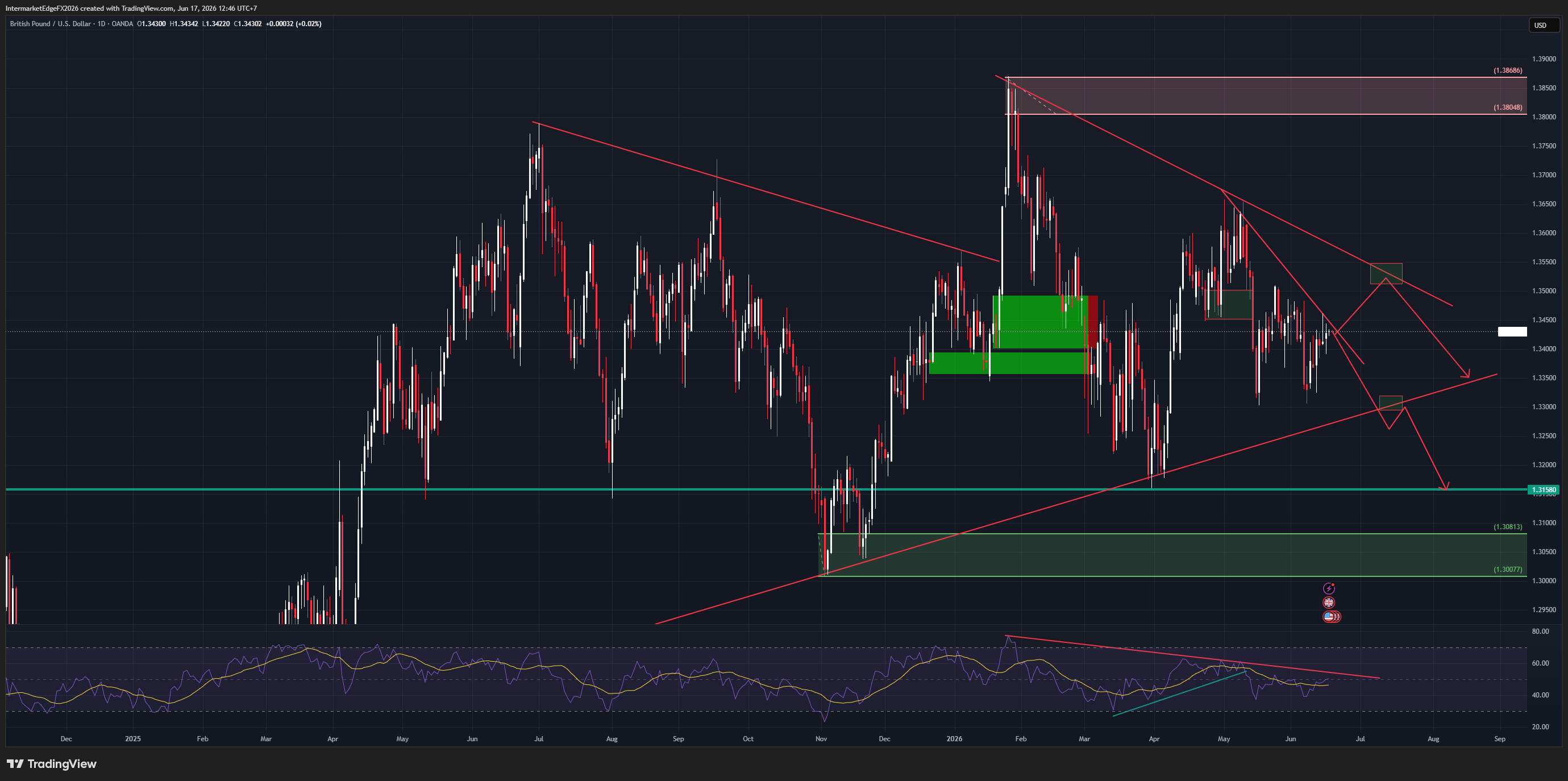
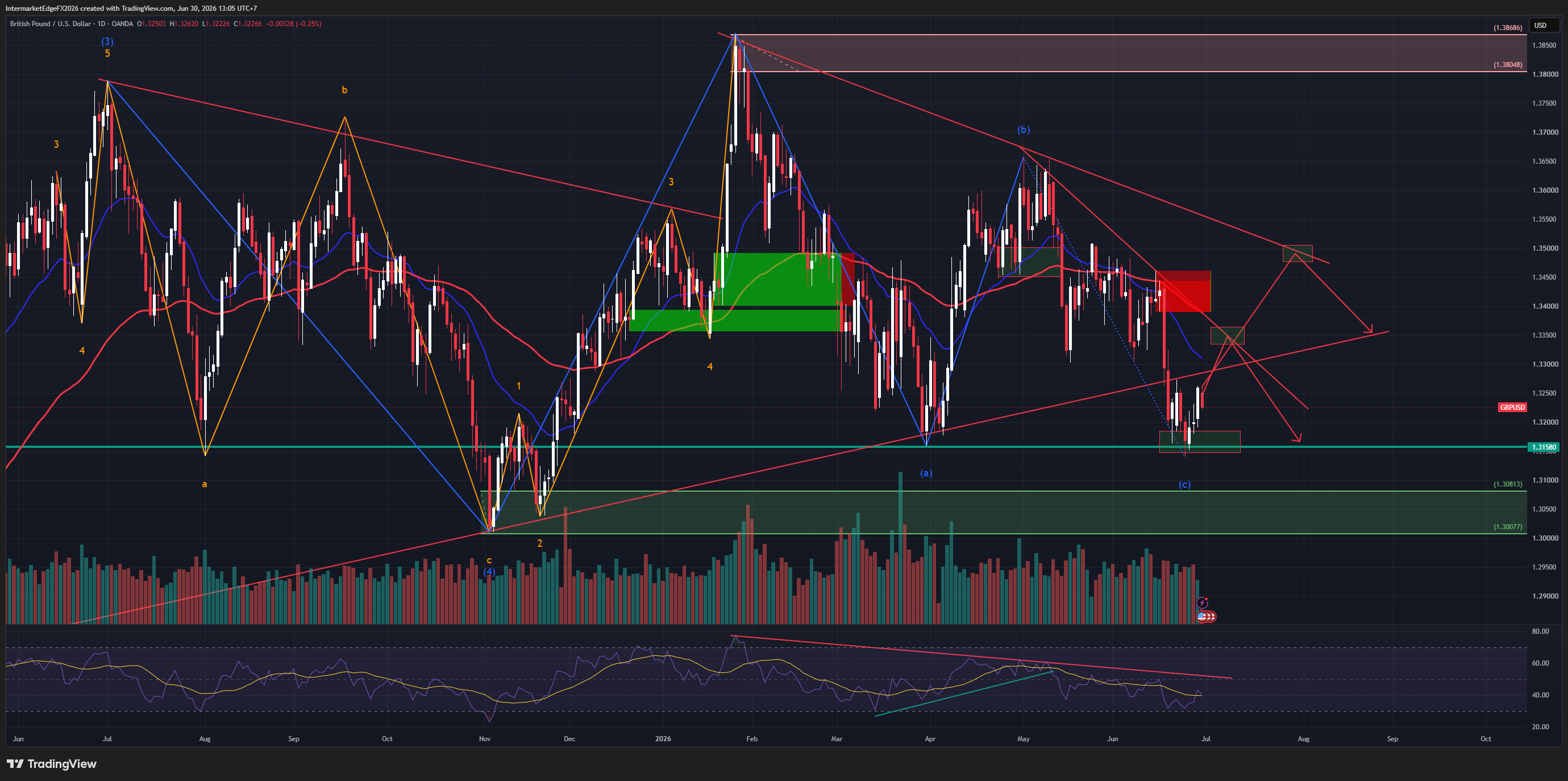
GBPUSD 1.3462 | 02 June 2026 Sterling has been trapped in the 1.3300–1.3500 range for two weeks, and the tension keeping it there is not resolving soon. Two forces are pulling in opposite directions and neither has won. The bull case runs through the dollar channel, not sterling itself. DXY is in a Medium Bear framework driven by the Iran deal decompression cascade — Brent has fallen $17.95 from its $111.27 peak on May 18. When the deal progresses, DXY falls and cable rises mechanically. The UK energy vulnerability factor amplifies this: as a net energy importer, every dollar of Brent decline below $90 benefits sterling disproportionately relative to other G10 pairs. The bear case is Bailey. The BoE Governor has spent the past week systematically removing rate hike premium from sterling. He stated that allowing inflation to exceed 2% is appropriate given weak growth, that the BoE is in no rush to raise rates while Iran remains uncertain, and that even a 60-day ceasefire would still create uncertainty. Markets were pricing 32bp of tightening in 2026; Bailey has been capping that at every opportunity. This morning's US ISM Manufacturing PMI at 54.0 — beating the 53.0 consensus — added a mild dollar bid that is currently capping GBPUSD near 1.3480. On the chart, the 1.3400–1.3450 green support has held on every test. Resistance at 1.3500–1.3550. Bear targets if support breaks: 1.3081, 1.3007, 1.2818. Key tell this week: EURGBP around ECB June 5. A break below 0.8600 is a leading indicator of cable strength. Conviction: Medium, Neutral-to-Mild Bear. Iran binary resolves the range.

GBPUSD: Dollar Steadies as Hopes for Iran Peace Deal Waver - Sterling Holding Ground But the RSI Is Telling a Different Story

GBPUSD: Dollar Steadies as Hopes for Iran Peace Deal Waver - Sterling Holding Ground But the RSI Is Telling a Different Story

GBPUSD 1.3454 today. Price is attempting recovery. But the RSI is not following. That divergence is the most important signal on this chart - and it is the only instrument in this week's series where RSI, not macro or price level, is the primary signal. Here is what the chart is showing: Two competing Elliott Wave counts are fighting for control. Orange count: completed 5-wave impulse from 2024 lows, correction incoming toward 1.30-1.31. Blue count: ABC correction with wave (c) targeting 1.3008-1.3077. Both point the same direction. RSI bearish divergence - price making higher lows, RSI making lower highs - is the tiebreaker. It typically appears at the end of wave (b) or terminal wave (5). Both are pre-correction setups. What makes GBPUSD unique in this week's series: Rate differential is near-zero. UK10Y 4.50% vs US10Y 4.493%, spread +0.007%. No structural carry advantage from either side. Unlike EURUSD (-1.568% headwind for EUR) or EURGBP (+1.51% favoring GBP), GBPUSD will be driven entirely by macro narrative. Not carry. Not rate differential. Just: Iran deal or no deal, and what the Fed says next. The macro picture today: oil market and FX market are diverging. Brent down $16.25 from the 18 May peak - oil still pricing the deal. But DXY steadied at 99.07 and the headline is "dollar steadies as deal hopes waver." Two markets, two different reads on the same event. Today is the most event-dense day of the week. Logan speaks. Cook speaks. ADP drops. EIA releases. Four catalysts simultaneously. Base case (45%): Logan hawkish, ADP strong, DXY bounces to 100+, GBPUSD retraces to 1.33-1.34. RSI divergence confirms. The only tell that matters: watch RSI after Logan speaks. If RSI turns up and GBPUSD holds 1.3400 - divergence resolving bullish. If RSI keeps declining while price attempts 1.35-1.36 - correction to 1.3077 is next. Conviction: Medium. Bias: Mildly bearish near-term. #GBPUSD #Sterling #DXY #IranDeal #ElliottWave #RSIDivergence #MacroAnalysis #FedWatch #BoE

EURGBP: Euro Underperforms Sterling as ECB-BoE Policy Divergence Deepens - Wave (c) Is Heading Toward the Major Demand Zone

EURGBP: Euro Underperforms Sterling as ECB-BoE Policy Divergence Deepens - Wave (c) Is Heading Toward the Major Demand Zone

EURGBP is the clearest directional trade in macro right now. And the reason has nothing to do with luck. Every single driver is pointing the same way: ECB cutting at 2.50%. Lagarde deliberately vague on June - markets read that as another cut coming. BoE holding. "Watching wage growth" is code for "we cannot cut yet." UK services inflation is still hot. UK-DE rate spread: +1.51% favoring GBP. Every ECB cut without a BoE cut widens this gap further. And then today happened. Brent dropped $7.03 in a single session - from $103.54 this morning to $96.51 this afternoon. Total decline from the 18 May peak: $14.76 in 8 days. Iran deal decompression is accelerating. Lower oil means lower EZ inflation, which gives the ECB even more room to cut. GBP is less exposed - UK has North Sea. The asymmetry favors GBP. The chart confirms it. D1 EURGBP shows a completed 5-wave impulse from 0.8200 to the 0.8900 peak. ABC correction is underway. Wave (c) is descending with a measured target at 0.8417-0.8441 - the major demand zone where institutional buyers absorbed supply in a prior cycle. This is not speculation. This is a measured Elliott Wave move with fundamental backing. Two catalysts will decide timing. Wednesday 27 May: Logan + Cook (FOMC) speak - indirect pressure on EUR. ECB June 5 meeting: if the ECB cuts 25bps and the BoE holds, wave (c) accelerates toward 0.8417. The tell: watch Brent. Break below $90 before June 5 = ECB has room to cut deeper = EURGBP lower with momentum. Conviction: Medium-High Bear. Target: 0.8417. Invalidation: break above 0.8710. #EURGBP #Euro #Sterling #ECB #BoE #IranDeal #ElliottWave #MacroAnalysis #RateDifferential #ForexAnalysis

EURGBP | May 20, 2026 The Cross That Tells the Truth - EUR Outperforming GBP for Structural Reasons

EURGBP | May 20, 2026 The Cross That Tells the Truth - EUR Outperforming GBP for Structural Reasons

**EURGBP | May 20, 2026** Most traders ignore EURGBP. That is exactly why it is worth paying attention to. Unlike EURUSD or GBPUSD, this cross strips out the dollar entirely. No USD noise. No safe-haven flows. No DXY mechanics. Just a direct, unfiltered comparison between two economies and the central banks managing them. And what it is telling you right now is both clear and counterintuitive. EUR is winning against GBP - not because the Eurozone is strong, but because the UK is structurally weaker in ways the market is actively pricing. The ECB is in a cutting cycle with the deposit rate at 2.50%, which should theoretically weaken EUR. The BoE is holding, which should theoretically support GBP through the yield differential - UK 10Y yields are 151 basis points above Germany. Yet EURGBP is holding at 0.8663 and the technical path is toward the major demand zone at 0.8420-0.8441 rather than a sharp EUR collapse. The explanation is asymmetry. EUR is absorbing a structural de-dollarization bid from global central banks and sovereign wealth funds reallocating reserves away from USD - a process that accelerated after the Iran war began in February 2026. GBP has no equivalent support. Sterling is not a reserve accumulation target. The BoE is paralyzed between sticky inflation and fragile growth, carrying a fiscal risk premium and post-Brexit trade friction discount that EUR does not. UK 10Y yields are elevated but failing to attract capital - when yield advantage cannot support a currency, the market is telling you something about credibility. Near-term technical structure points toward continued grinding lower to test 0.8420-0.8441. Medium-term structural argument favors EUR if that zone holds. Watch 0.8420. The reaction there tells you which force is stronger.

EURUSD | May 19, 2026 The Euro at 1.1621 - Holding Above 1.14 While the World Reprices the Dollar

EURUSD | May 19, 2026 The Euro at 1.1621 - Holding Above 1.14 While the World Reprices the Dollar

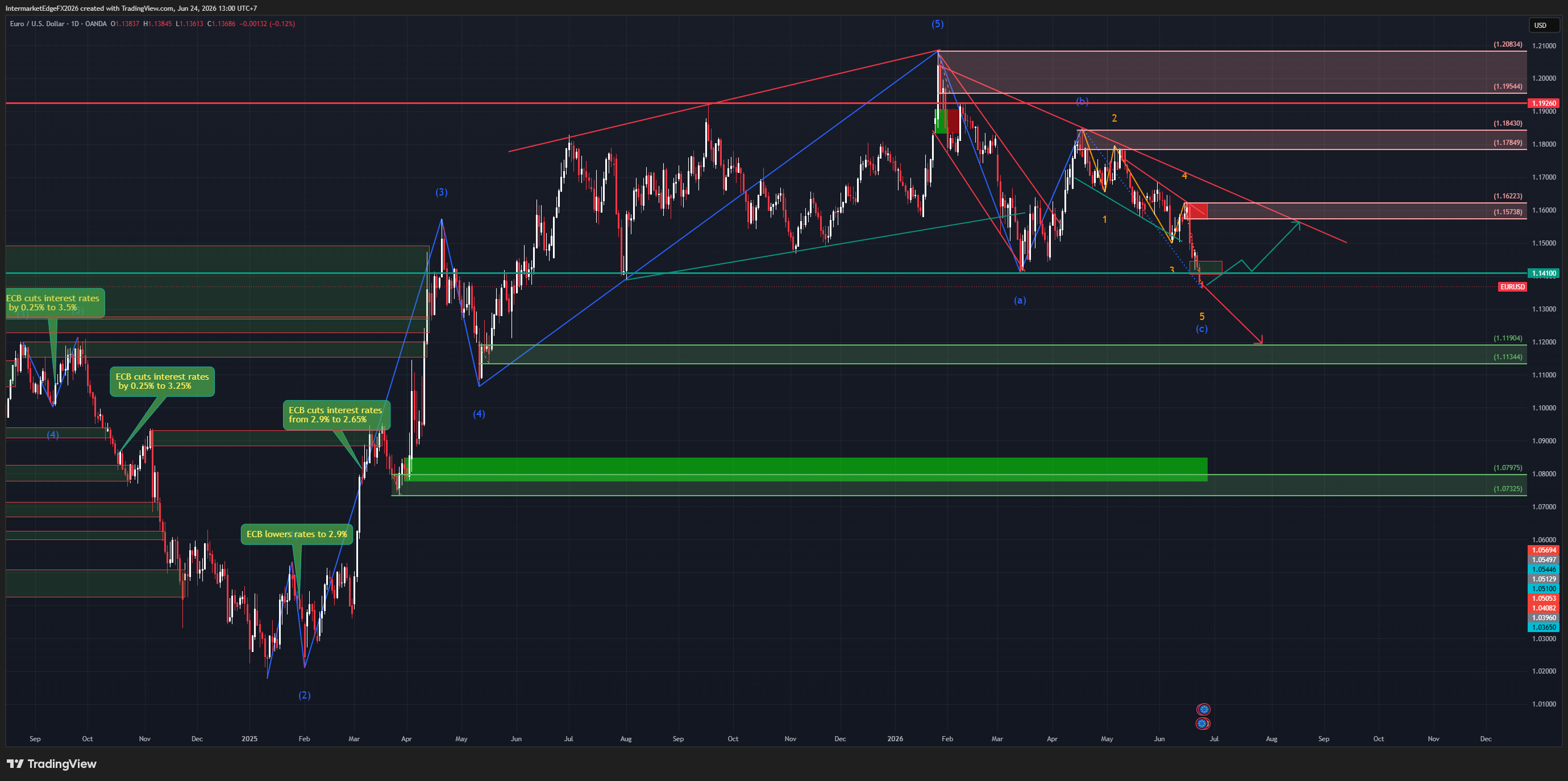
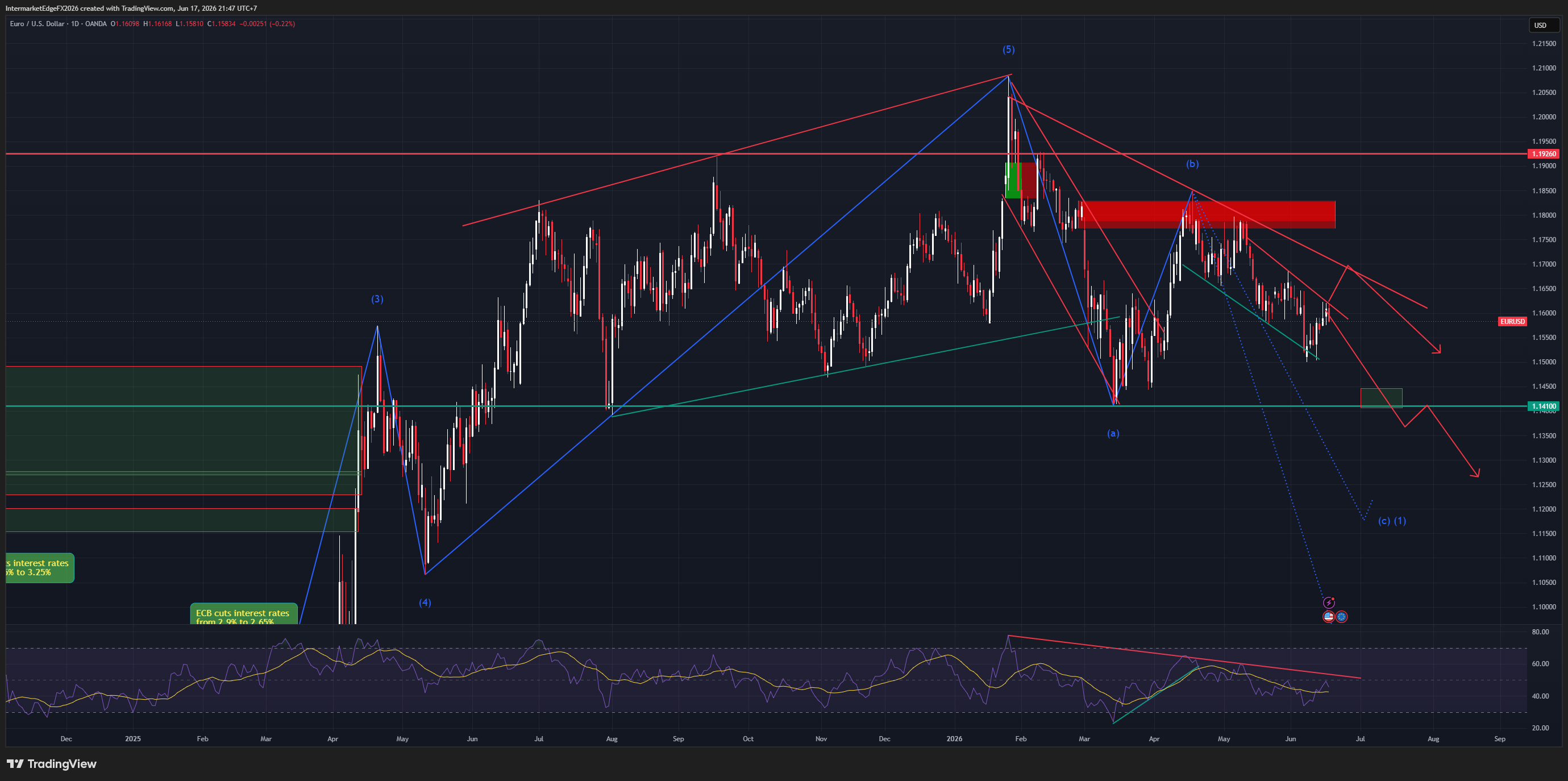
**EURUSD | May 19, 2026** EURUSD is trading at 1.1621 tonight. By every classical measure, it should not be here. The ECB is in a cutting cycle with the deposit rate at 2.50%. Eurozone CPI is at 2.2%. The DE-US 10Y yield spread is -163 basis points - one of the widest structural disadvantages for EUR in over a decade. Every rate differential model says EURUSD should be closer to 1.08-1.10. The fact that it is trading 600 pips above that range is the most important macro signal in FX right now. Something structural has changed. Global central banks and sovereign wealth funds - particularly from the Middle East, Asia, and emerging markets - have been systematically reducing USD exposure since the SWIFT exclusion of Russia in 2022. The Iran war shock of February 2026 accelerated that process. EUR is the deepest and most liquid alternative to USD in global reserve portfolios, and it is absorbing a structural bid that has nothing to do with ECB versus Fed policy. This is the regime that explains the anomaly. De-dollarization flows are non-price-sensitive and do not stop for weekly data releases. They provide a persistent floor under EUR demand that the standard interest rate model cannot see. Two additional forces are reinforcing this bid: Warsh uncertainty - the new Fed Chair has zero established reaction function, keeping institutional dollar positioning tentative - and Brent crude above $110, which signals the Hormuz premium is still active and the geopolitical urgency driving reserve reallocation has not eased. The near-term structure is consolidation between 1.14 and 1.19. No collapse without a hawkish Warsh shock or genuine Hormuz resolution. No breakout above 1.19 without US data deterioration or further geopolitical escalation. Watch Brent and EURGBP daily - they tell you whether the regime is intact before EURUSD price does.

GBPUSD | May 19, 2026 Sterling at 1.3412 - Holding the Line While the Dollar Searches for Direction

GBPUSD | May 19, 2026 Sterling at 1.3412 - Holding the Line While the Dollar Searches for Direction

GBPUSD is trading around 1.3412 within a descending wedge structure that has been developing since the January 2026 highs. The pair is now approaching a key compression point, with UK labor market data on May 19 likely to determine the next breakout direction. From a macro perspective, the USD remains trapped in a “stagflationary ambiguity” regime: inflation is still elevated while growth is slowing, leaving the Fed without a clear path forward. Despite higher US yields, DXY remains capped below 100 due to EUR strength and broader de-dollarization flows, indirectly supporting GBPUSD. On the UK side, the economy faces its own stagflation pressures. Inflation remains sticky, growth is weak, and the BoE is stuck in a difficult position — unable to tighten aggressively but not ready to ease either. EURGBP at 0.8682 confirms that GBP has been underperforming EUR, meaning GBPUSD resilience has been driven more by USD weakness than genuine sterling strength. Three major drivers are shaping GBPUSD this week: 1. UK labor data (Claimant Count & Unemployment Rate) Weak data would pressure GBP lower, while stable employment and strong wages could support an upside breakout. 2. USD direction via Fed communication and DXY A move above DXY 100 would create renewed downside pressure on GBPUSD. 3. The wedge compression structure itself The market is nearing the wedge apex, suggesting a significant breakout is likely within 1–2 weeks. Key technical levels: * Resistance: 1.3500 → 1.3727 → 1.3800 * Support: 1.3308 → 1.3196 → 1.2700 Bullish scenario: * UK labor data remains firm and DXY stays below 100 → GBPUSD could break higher toward 1.3500 and potentially 1.3727. Bearish scenario: * UK labor data deteriorates while DXY breaks above 100.48 → GBPUSD could fall below 1.3308 and reopen the path toward the 1.28 region. Overall, the technical structure remains moderately bullish, but the fundamental outlook is still heavily dependent on UK labor data and the bro

InterMarketEdge

© 2026 InterMarketEdge. Financial intelligence for inter-market traders.