Tag: USD — InterMarketEdge

Tag: USD

USDCAD — Canadian Dollar at Eight-Week Low, BoC Holds June 10, Oil Slides, and USMCA Risk Keeps the Loonie Trapped

USDCAD — Canadian Dollar at Eight-Week Low, BoC Holds June 10, Oil Slides, and USMCA Risk Keeps the Loonie Trapped

USDCAD 1.3893 | Canadian Dollar 8-week low | 04 June 2026 The Canadian dollar is at its weakest in eight weeks, and three forces are keeping it there simultaneously. First, oil. WTI has declined from $95.33 this morning to $92.61 — a $2.72 drop in a single session on Iran deal optimism. Canada is the largest crude exporter to the US. The oil-CAD channel is among the most stable relationships in FX, and it is working against the loonie today. The counterintuitive implication: if the Iran deal completes and oil falls toward $80-85, CAD gets weaker, not stronger. USDCAD could test 1.4099 resistance on deal completion. Second, domestic weakness. Canada's Q1 2026 GDP contracted for a second consecutive quarter. BoC core inflation measures slowed to five-year lows. The Bank of Canada meets June 10 and is expected to hold at 3.25% — but a dovish tone acknowledging the growth weakness would push USDCAD toward 1.4000-1.4050. Third, USMCA risk. AUDCAD at 0.9920 — below the 1.000 parity level — confirms the structural CAD discount from trade uncertainty is still live. Until AUDCAD holds above 1.000, CAD carries a structural discount that cannot be removed by oil alone. On the chart, price is approaching the 1.4099-1.4139 resistance zone. A daily close above 1.4099 confirms the bull move. A daily close below 1.3593 activates wave (c) lower toward 1.3477 then 1.3400. BoC June 10 is the gating event. Conviction: Medium, Mildly Bullish.

USDJPY Breaches 160 — Gulf Hostilities Boost Dollar, BoJ Intervention Clock Is Running, and the June 16 Hike Is Now 66% Priced

USDJPY Breaches 160 — Gulf Hostilities Boost Dollar, BoJ Intervention Clock Is Running, and the June 16 Hike Is Now 66% Priced

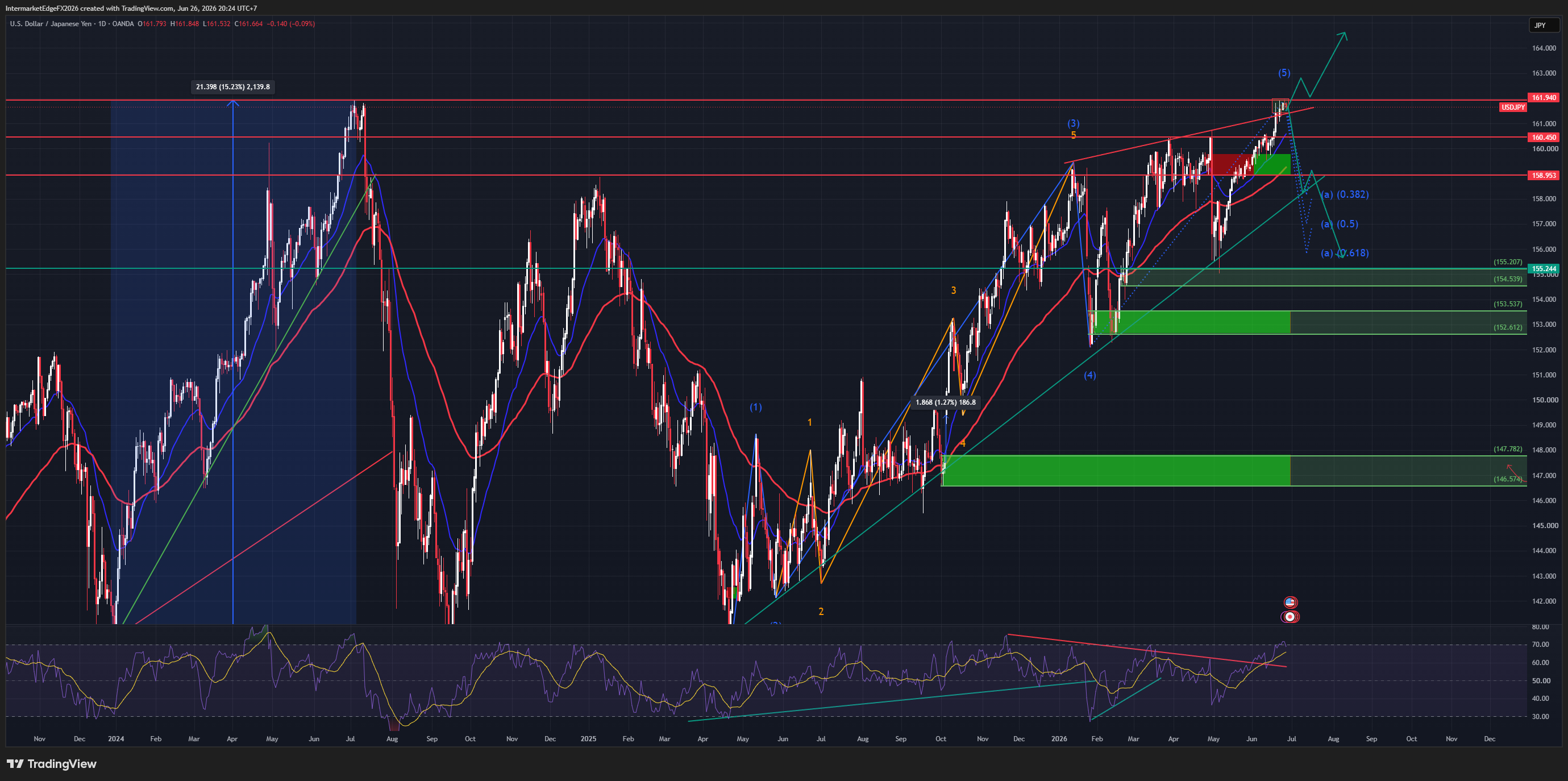
USDJPY 159.897 | intraday high 161.946 | 03 June 2026 USDJPY touched 161.946 this morning — clearing the prior intervention zone — then reversed 200 pips. That single candle is the most important price action of the week. It is either the market self-correcting ahead of MOF action, or verbal intervention has already begun. The structural bear case is built on three pillars that the data pipeline is obscuring. First, JP10Y is not 1.47% as the stale pipeline reads — the chart sidebar shows 2.621%. The corrected US-JP spread is 1.834%, not 2.985%. Carry trade math is deteriorating faster than most analysis reflects. Second, BoJ June 16 hike probability has moved to 66%. The April 28 meeting produced three dissenters voting to hike immediately, and Shunto wages showed 5.09% for a third consecutive year above 5%. Third, the MOF intervention asymmetry is severe: the Ministry spent $62 billion in 2024 defending the yen, the precedent near 160 produced an 800-pip round trip, and the firepower remains. The tactical complication is Gulf hostilities. Trump rejected the halt in US-Iran talks. Brent has retraced above $100. Oil above $100 is dollar-positive and yen-negative simultaneously — Japan is the world's fourth-largest oil importer. This dual channel is why the pair broke 160 today. It reverses the moment a deal is signed. Invalidation: daily close above 161.346. Bear confirmation: daily close below 159.000. Wave (c) targets: 152.612 → 147.782. Today's daily close is the definitive tell. Conviction: Medium-High Bear.

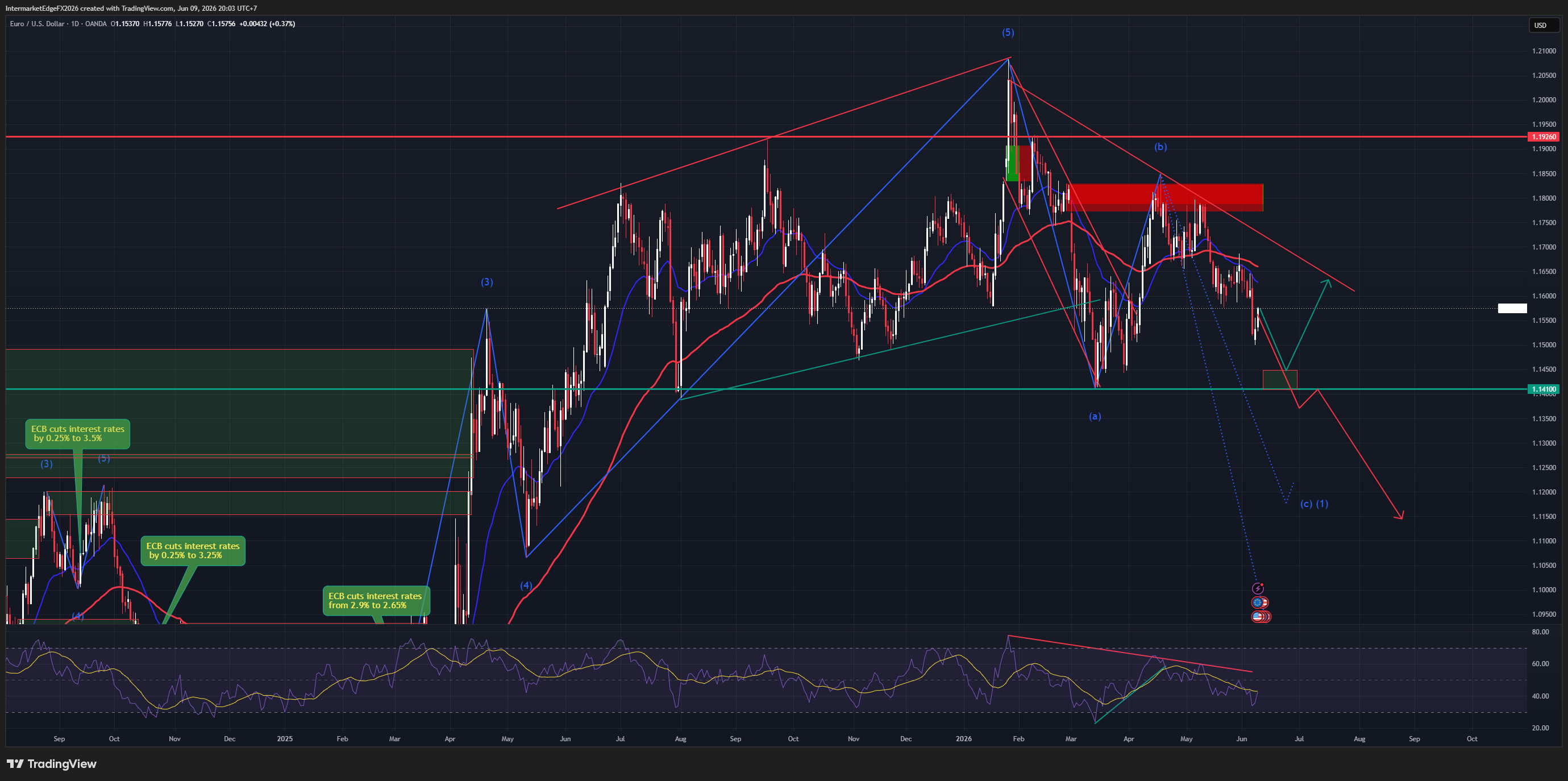
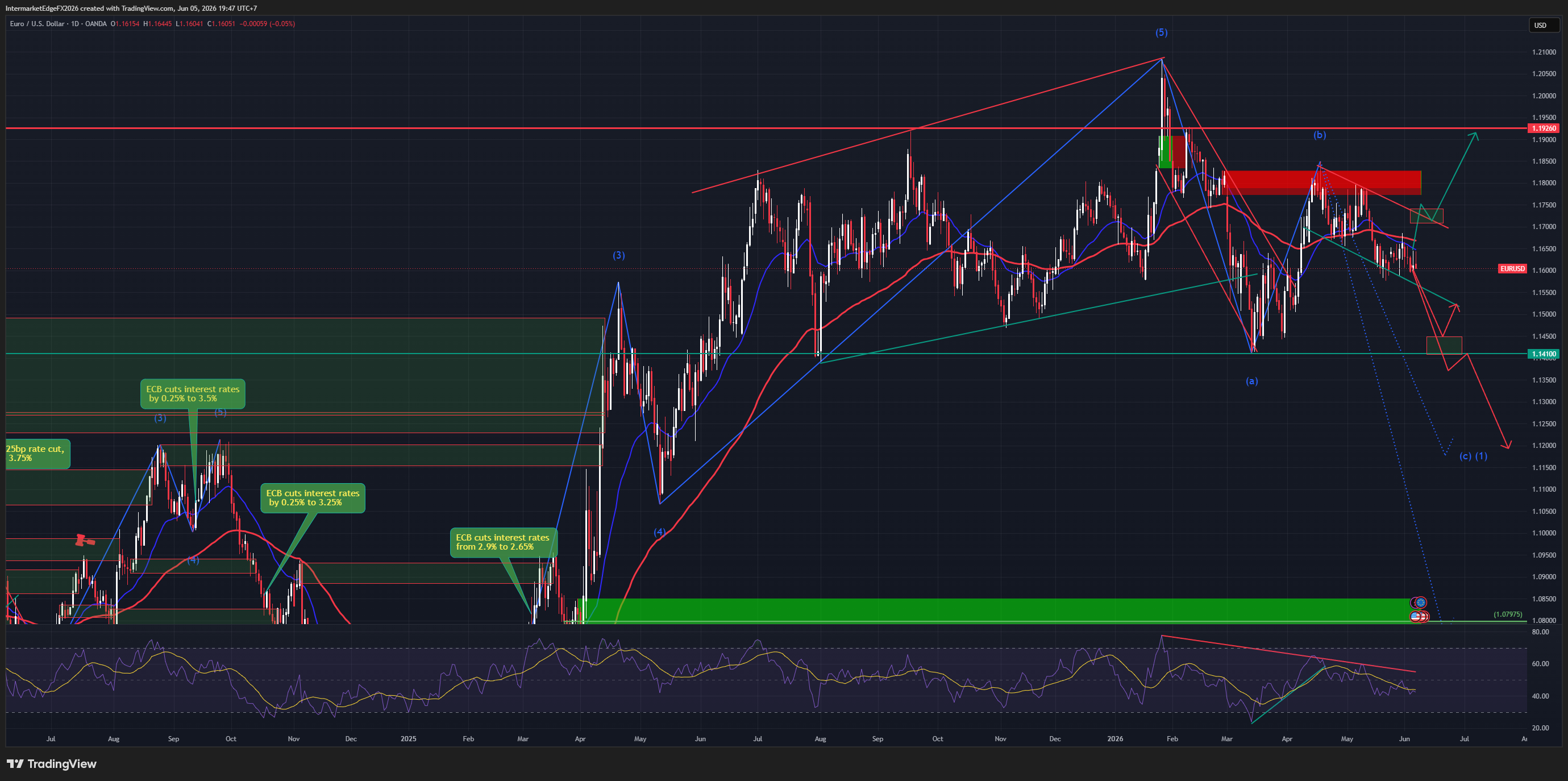
Euro Wobbles as Markets Cling to Hopes for Middle East Peace Deal - Two Competing Scenarios Are Fighting Directly on the Chart

Euro Wobbles as Markets Cling to Hopes for Middle East Peace Deal - Two Competing Scenarios Are Fighting Directly on the Chart

**EURUSD 1.1633 is not a simple dollar-weakness trade. It is a market suspended at the exact crossroads between two Elliott Wave scenarios pointing in opposite directions.** Here is the paradox no one is talking about: The Iran deal is simultaneously bullish AND bearish for EUR depending on your timeframe. - Short-term: deal progress weakens dollar, EURUSD rises - Medium-term: deal signed = Hormuz reopens = de-dollarization urgency fades = structural EUR bid partially unwinds = EURUSD corrects toward 1.13-1.14 The same catalyst. Two opposite outcomes. Different clocks. The chart shows this tension clearly. From the 2022 low at 1.0353, EURUSD completed a 5-wave impulse to 1.2050+, then entered ABC correction. Wave (c) is currently developing with two live scenarios: Bear: extends to 1.1400 then 1.0795 (1.618 extension) Bull: correction done, next impulse toward 1.19-1.21 Rate differential of -1.568% (DE10Y vs US10Y) favors USD structurally. ECB cutting at 2.50% while Fed holds. Historical precedent: rate differential wins over 6-12 months. The only force holding EUR above 1.16 despite all of this: central bank de-dollarization reserve reallocation. Price-insensitive. Does not reverse in weeks. Wednesday 27 May is the decision day. Two catalysts land simultaneously: Logan (Fed) speaks + ECB Financial Stability Review drops. Hawkish Logan + dovish FSR = double whammy for EUR. **The only level that matters: 1.1700** Break above = bull confirmed, target 1.19-1.20 Fail below 1.15 = bear activated, target 1.0795 No conviction trade exists between these two levels. Waiting for Wednesday. #EURUSD #Euro #DXY #MacroAnalysis #ElliottWave #IranDeal #Dedollarization #ECB #FedWatch #IntermarketAnalysis

AUDUSD | May 22, 2026 The Commodity Currency That Lost Its Commodity Story

AUDUSD | May 22, 2026 The Commodity Currency That Lost Its Commodity Story

**AUDUSD | May 22, 2026** AUDUSD is trading at 0.7143. That number looks stable. It is not. Three structural forces are converging simultaneously against the Australian dollar, and the catalyst that ties them together arrived on Wednesday when the ABS released April labor force data. Australia's unemployment rate rose to 4.5% - the highest since November 2021. Employment fell by 18,600, the first contraction in five months, against expectations of a 17,500 gain. The participation rate declined. The underemployment rate ticked higher. Every measure of labor market health deteriorated simultaneously. The market partially priced it: AUDUSD dipped to 0.7106 on the release before recovering to 0.7143 on Iran deal optimism. That recovery is borrowed time, not structural support. The unemployment shock matters because it changes the RBA calculus. Before Wednesday, the RBA was "Hold 4.10%, watching CPI." After Wednesday, the labor market is cooling faster than expected, unemployment is approaching the RBA's own NAIRU estimate of 4.5-5.0%, and the case for rate cuts is building. A cutting RBA versus a holding-or-hiking Fed is a structural AUD-negative that plays out over months, not sessions. The second force is the commodity premium compression. AUD rode the Iran war commodity shock higher, but the RBA's own May Statement acknowledges this boost is short-lived with few lasting implications for Australian mining. Brent has now fallen from $111.27 at the start of this week's analysis series to $104.62 today. The terms-of-trade tailwind is fading. The third force is AUD's high risk-sentiment beta. VIX at 16.76 and equities at new week-highs are providing a temporary floor. When that floor is removed - whether by an Iran deal collapse, a China disappointment, or an EIA inventory build - AUD reprices fast. Key levels: 0.7276-0.7200 resistance, 0.6938-0.6879 near-term target, 0.6491-0.6438 structural floor if both commodity and RBA premium exit simultaneously. Conviction:

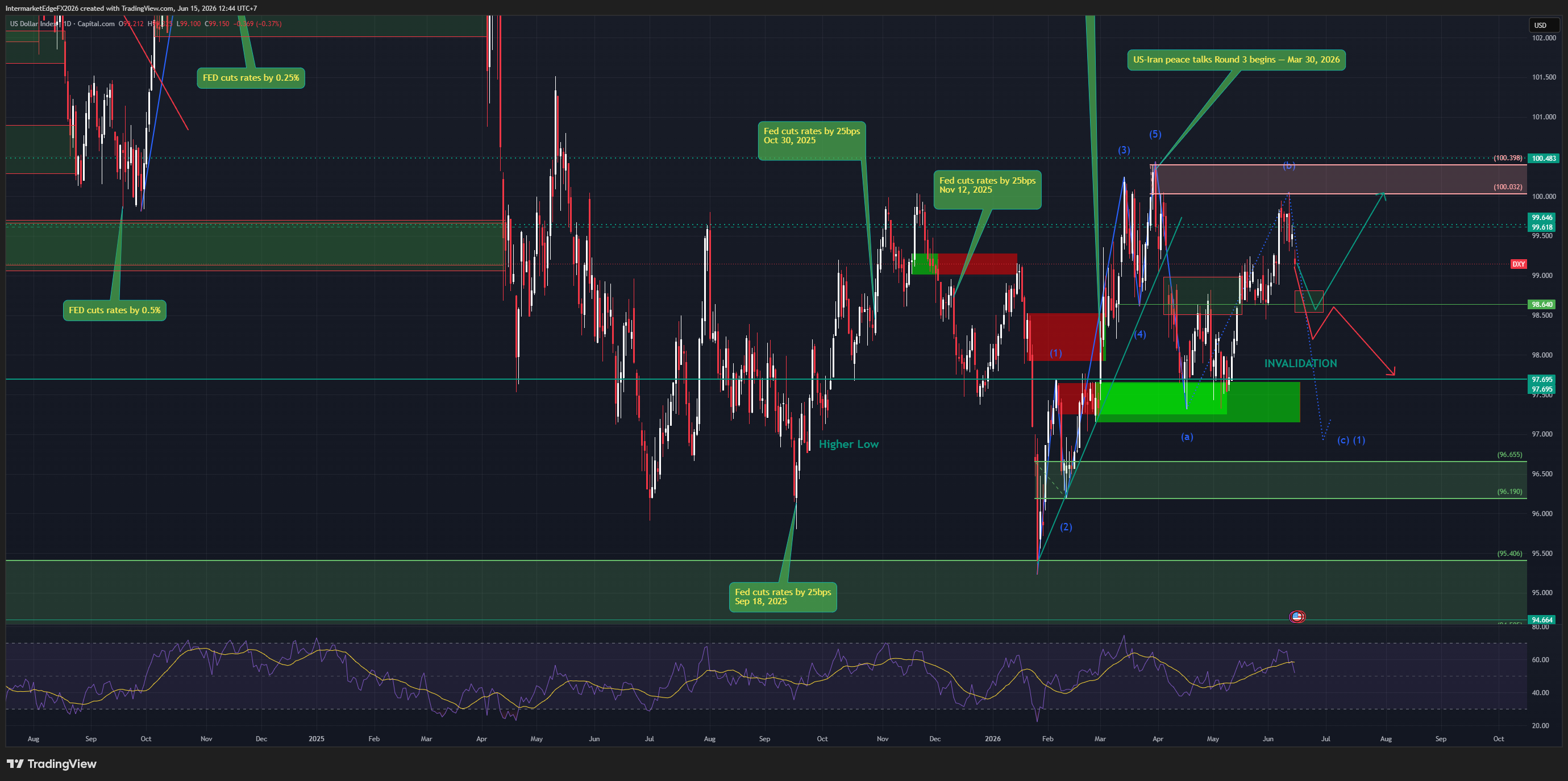
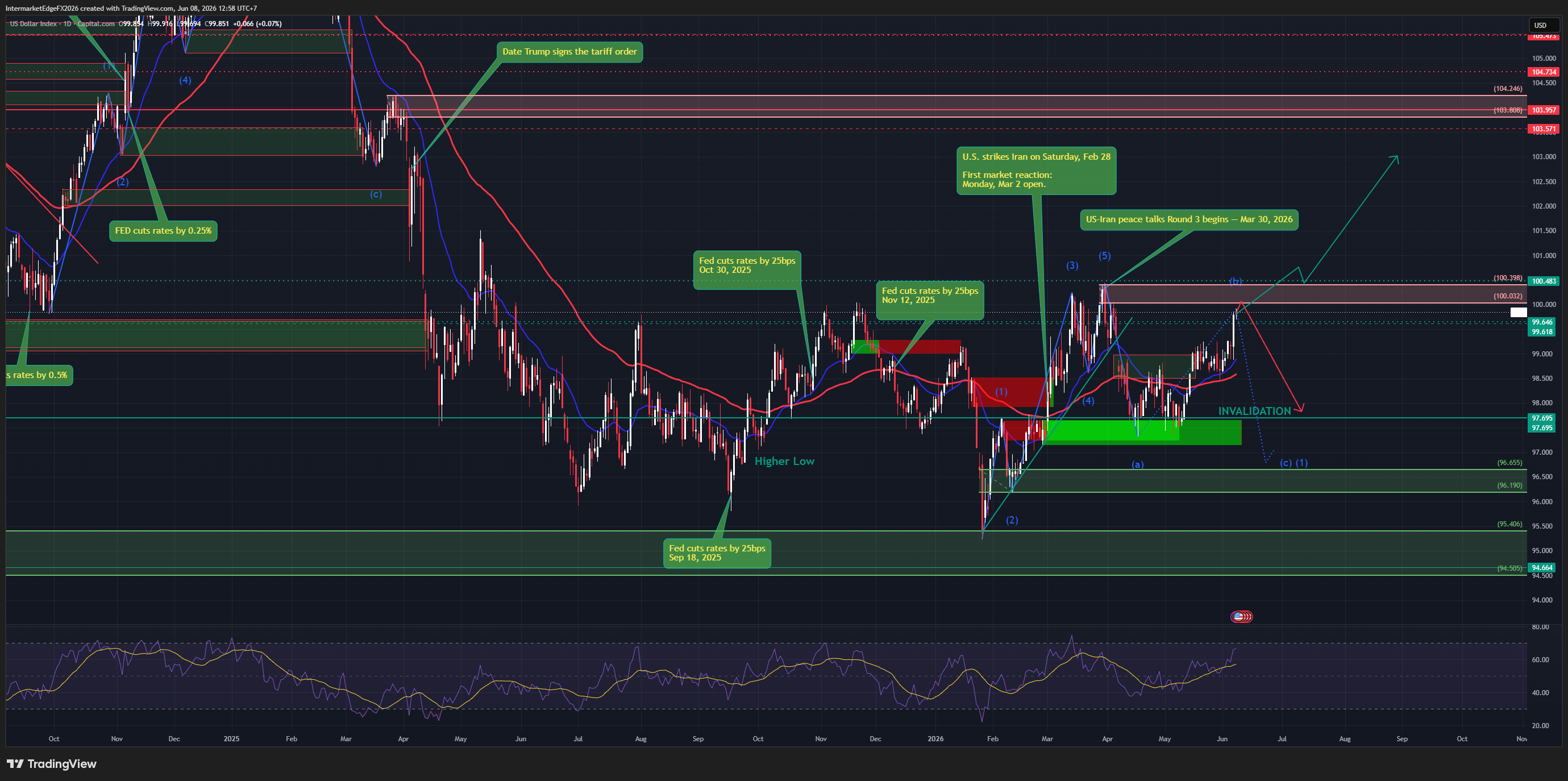
The Dollar at 98.78 - Warsh Era Begins, Dollar Searches for Direction

The Dollar at 98.78 - Warsh Era Begins, Dollar Searches for Direction

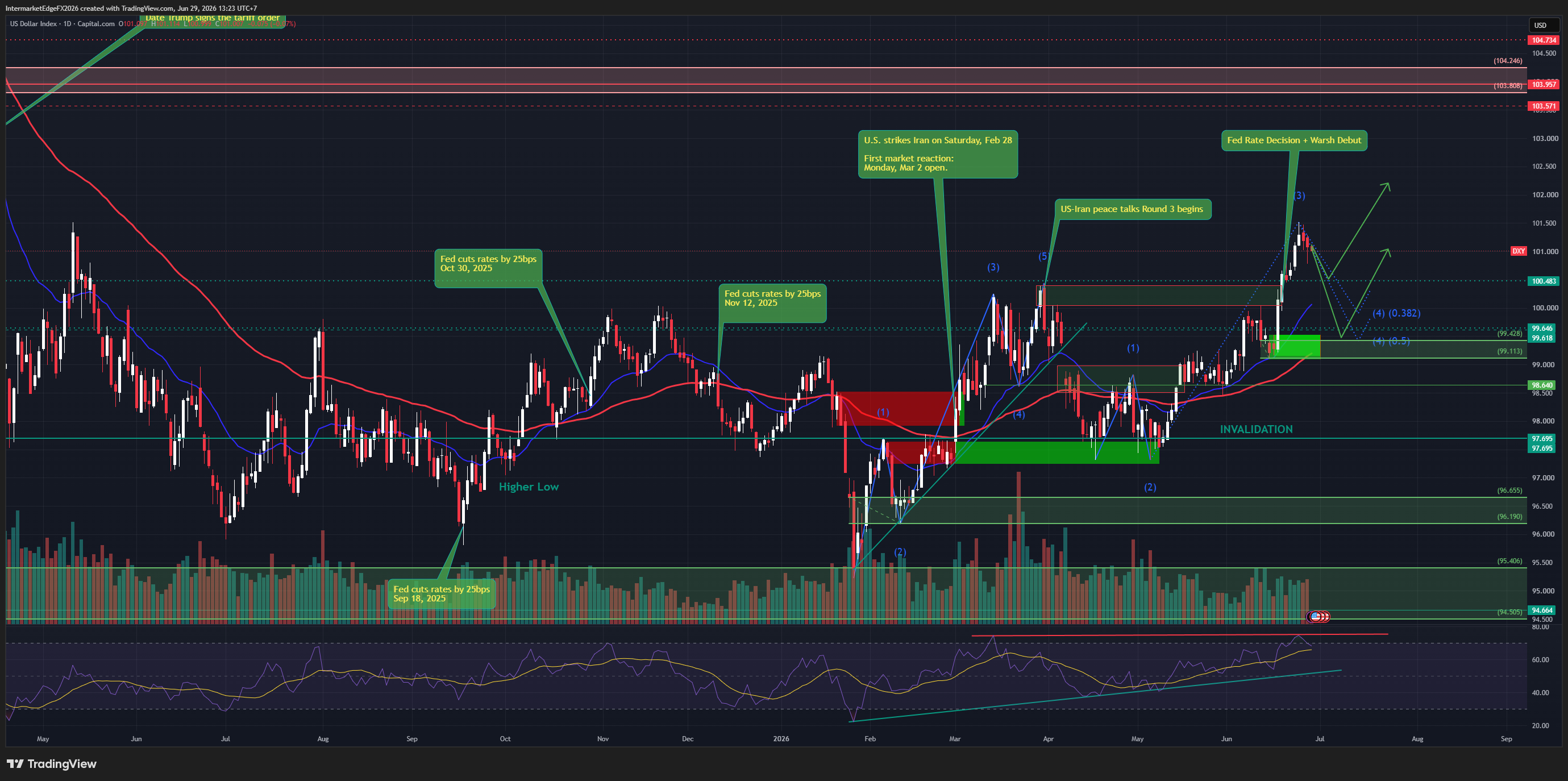
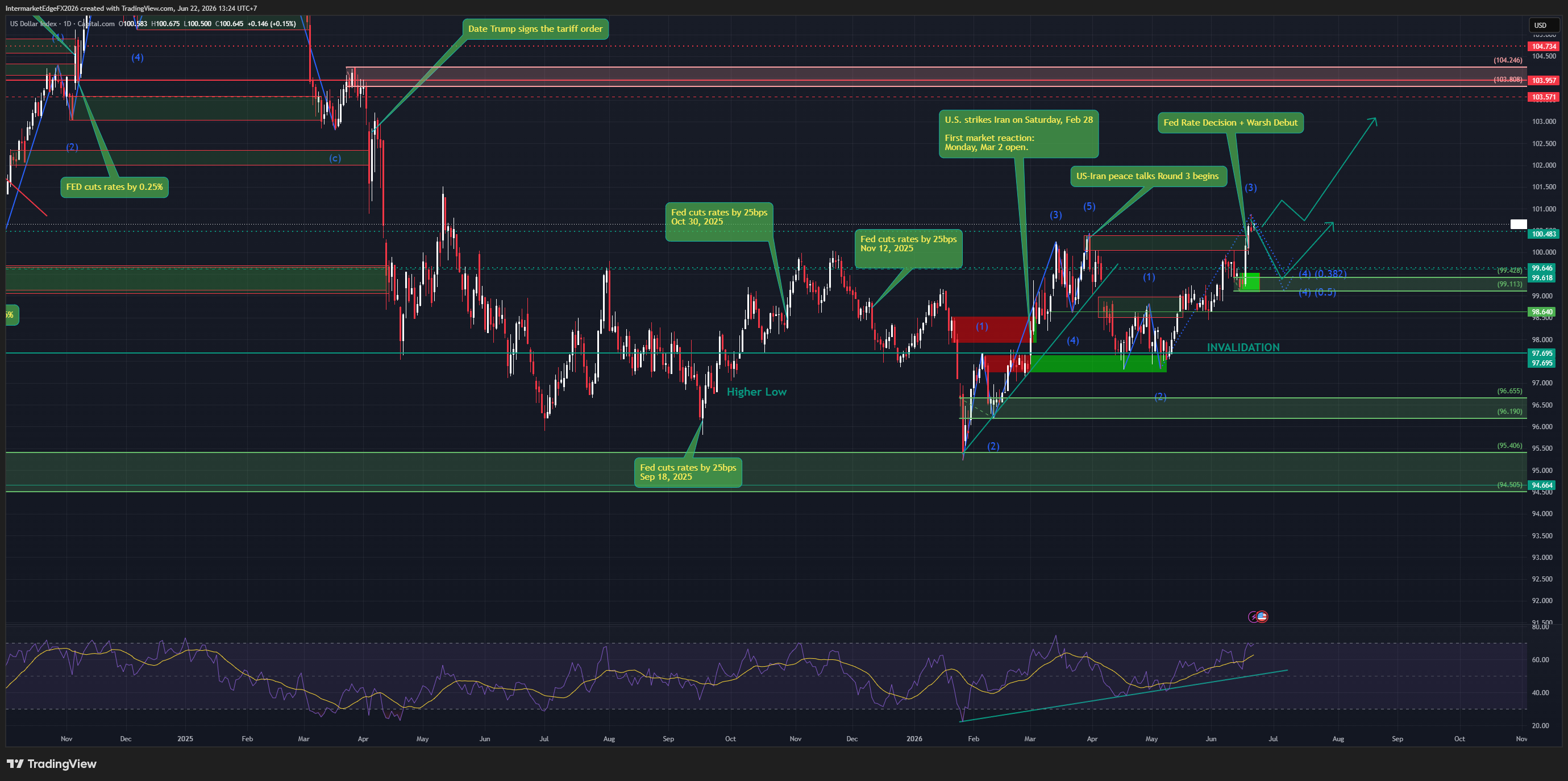
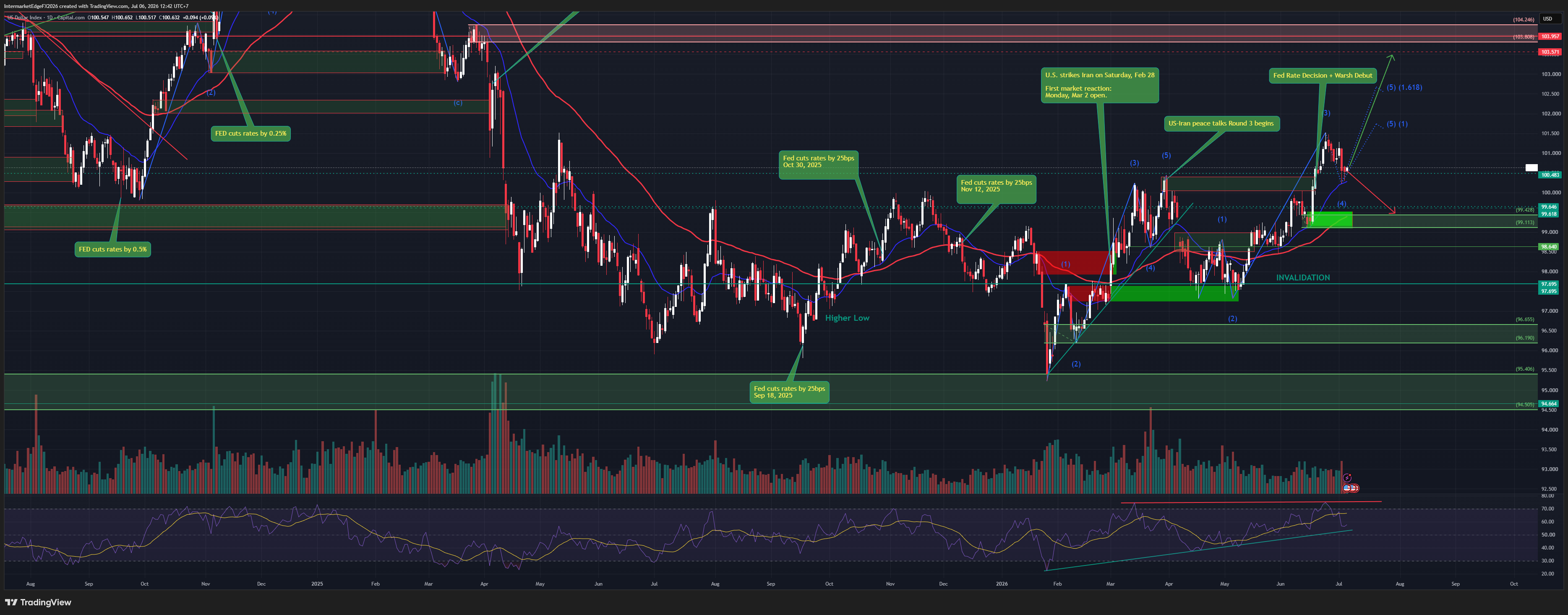
**DXY | Weekly Outlook - May 19, 2026** DXY is at 98.78. By every classical input it should be higher. That gap between where the dollar is and where the macro narrative says it should be is the most important question in FX this week. The United States has a new Fed Chair with a hawkish reputation. April CPI printed at 3.8%. CME FedWatch is pricing 40% probability of a rate hike by April 2027. In any previous tightening cycle, this configuration produces a stronger dollar. Yet DXY has been unable to reclaim 100 for nearly three months - since the Iran war began in late February and restructured the way institutional allocators think about reserve assets. What is holding DXY below 100 is not weakness in the US economy. It is the mechanical weight of EURUSD at 1.1651 - which alone accounts for 57.6% of the index - combined with a de-dollarization structural bid from EM central banks and sovereign wealth funds that does not respond to weekly rate moves. Global yields are also rising in parallel across DE10Y, JP10Y, and UK10Y, which limits the relative yield advantage that would normally drive institutional dollar buying. The regime is Stagflationary Dollar Ambiguity. Two forces are fighting simultaneously and neither has won: the inflation case for dollar strength and the geopolitical case for reserve asset diversification away from USD. This week, the resolution comes from one event: FOMC Member Waller speaks Tuesday May 19. Three scenarios - hawkish confirmation sends DXY toward 99.62 then 100.48, ambiguity keeps the range, dovish surprise breaks 97.695 support. Conviction is Medium-Low. This is not a week for directional dollar positioning ahead of Tuesday.

InterMarketEdge

© 2026 InterMarketEdge. Financial intelligence for inter-market traders.